LED Strips: What They Are and How They Are Used
What Are LED Strips and What Are They Used For #
LED technology has become one of the most popular lighting solutions in homes, commercial spaces, and modern architecture. One of the most flexible lighting options available today is LED strips, which allow users to create modern, energy-efficient, and visually attractive lighting in almost any space.
Thanks to their simple installation, low energy consumption, and wide range of applications, LED strips are suitable for both decorative and functional lighting.
What Are LED Strips #
An LED strip is a flexible lighting strip that contains small LED diodes mounted on a narrow circuit board together with electronic components. The strip is usually built on a flexible PCB (printed circuit board), which allows it to bend and adapt to different surfaces and shapes.
Most LED strips include an adhesive backing, making installation quick and easy. They are typically sold in 5-meter reels and can be cut at marked points to achieve the exact length required for a project.
Main Advantages of LED Strips #
- Low energy consumption
- Long lifespan (often more than 30,000 hours)
- Easy installation
- Flexible and customizable length
- Wide range of colors and light temperatures
- Dimming capability
These features make LED strips an ideal solution for modern lighting installations.

What Are LED Strips Used For #
LED strips have a very wide range of applications and are often used where traditional lighting fixtures are impractical or where a modern design effect is desired.
Decorative Lighting #
One of the most common uses of LED strips is decorative lighting. Indirect light lines can create a pleasant atmosphere and highlight design elements in a space.
Common applications include:
- TV backlighting
- Shelf and display lighting
- Furniture lighting
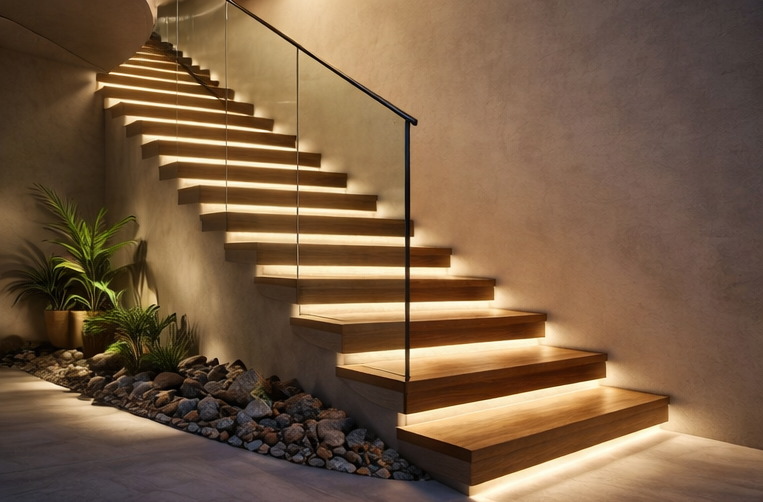
- Stair lighting
- Ceiling or drywall backlighting
This type of lighting enhances architectural features and gives interiors a modern appearance.
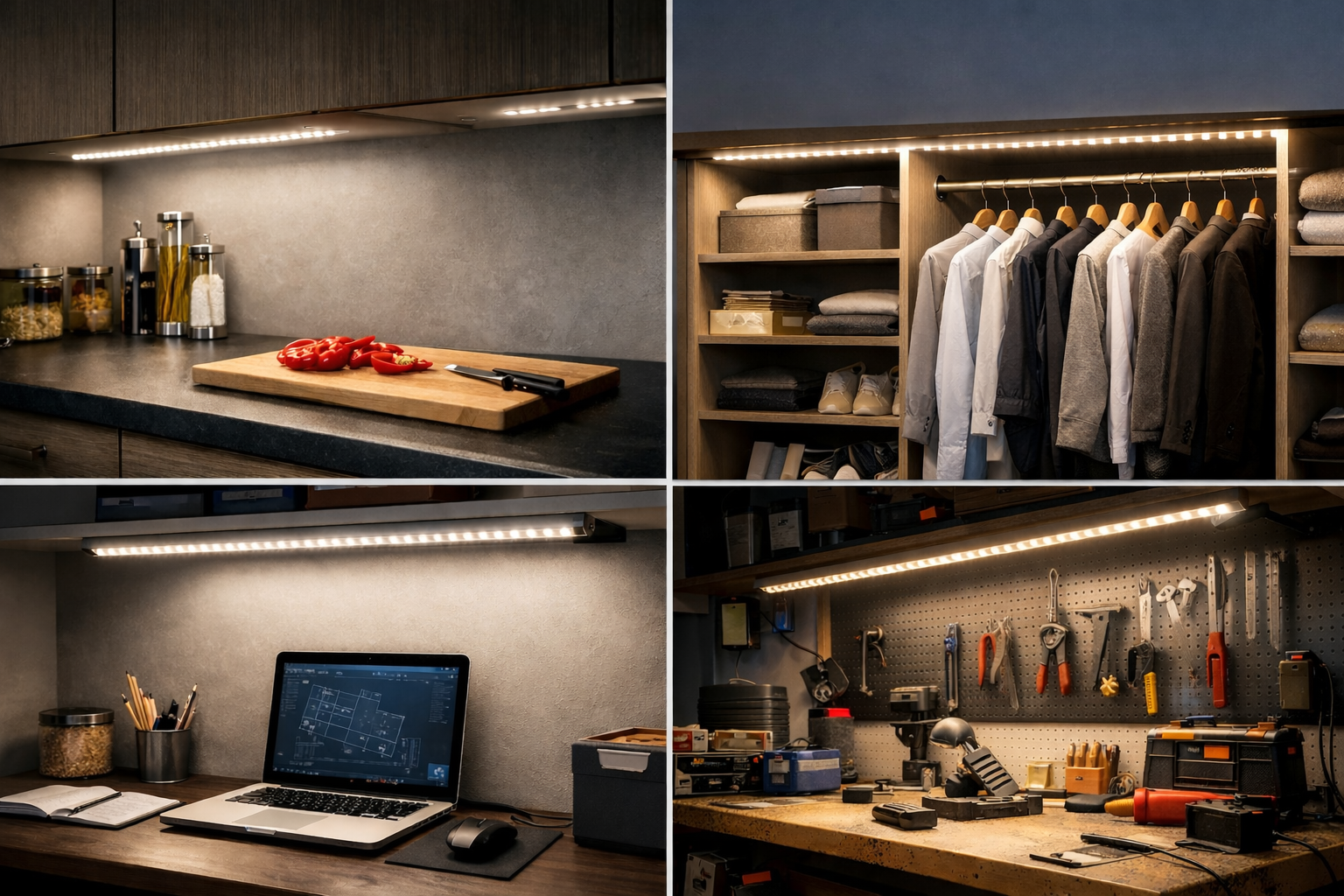
Functional Lighting #
LED strips can also serve as a functional lighting source, especially in smaller working areas.
Typical uses include:
- Under kitchen cabinets
- Wardrobes and closets
- Workspaces
- Workshops or technical rooms
When combined with the right LED power and aluminum profile, LED strips can provide strong and evenly distributed light.
Architectural Lighting #
In modern architecture, LED strips are frequently used to create clean light lines and highlight architectural details.
Typical applications include:
- Light lines integrated into walls or ceilings
- Stair illumination
- Ceiling backlighting
- Façade lighting
These lighting solutions create a sophisticated and professional visual effect.

Types of LED Lighting by Color Temperature #
When choosing LED strips, an important parameter is the color temperature, which influences both the atmosphere and the functionality of the space.
Warm White #
Warm white light has a color temperature of approximately 2700K – 3000K. It creates a cozy and comfortable atmosphere.
Commonly used in:
- Living rooms
- Bedrooms
- Restaurants
- Hotels
Neutral White #
Neutral white light has a color temperature of around 4000K. It provides balanced illumination suitable for both residential and working environments.
Common uses include:
- Kitchens
- Bathrooms
- Offices
- Workspaces
Cool White #
Cool white light has a color temperature of approximately 6000K – 6500K. It produces bright and high-contrast lighting.
Commonly used in:
- Technical rooms
- Workshops
- Warehouses
- Commercial spaces
Color LED Strips and RGB Lighting #
In addition to standard white lighting, there are also color LED strips and RGB LED strips, which allow the user to change lighting colors.
Using a controller or smart lighting system, users can set:
- Different colors
- Dynamic lighting effects
- Smooth color transitions
- Mood lighting for various situations
More advanced systems such as RGBW or RGB+CCT combine colored lighting with high-quality white light, providing even greater flexibility for lighting design.
Summary #
LED strips represent a modern, flexible, and energy-efficient lighting solution. Because of their versatility, they are suitable for decorative, functional, and architectural lighting. By selecting the right strip type, color temperature, and power level, it is possible to create effective and visually appealing lighting for any space.