
LED Neon
LED Neon (Neon Flex): Advanced Linear Lighting Technology #
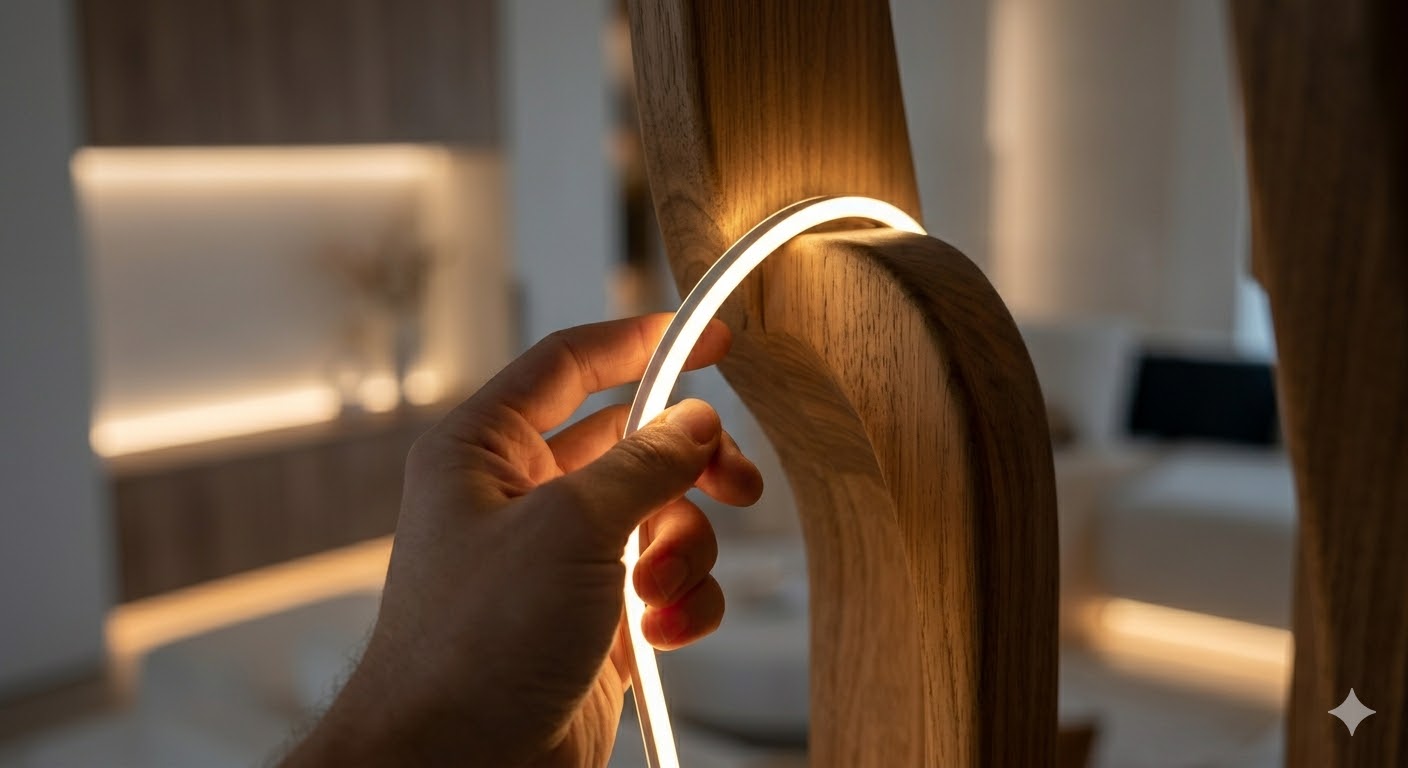
LED neon systems, commonly referred to as LED Neon Flex, represent a modern and technologically advanced alternative to traditional glass neon tubes. By utilizing solid-state lighting (LEDs) integrated into a flexible diffused housing, these systems enable the creation of continuous light lines with high optical uniformity and superior mechanical durability.
Construction and Operating Principle #
From a technical perspective, LED neon consists of the following core components:
- LED chips (SMD or COB technology) – high-efficiency light sources with optimized luminous efficacy (lm/W)
- Flexible PCB substrate – ensures stable electrical distribution and current flow
- Optical diffuser (silicone or PVC) – homogenizes the light output and eliminates visible LED hotspots
- Power supply system (12V / 24V DC) – provides safe, low-voltage operation
The critical element is the optical diffuser, which transforms discrete LED point sources into a continuous, visually uniform line of light with minimal luminance variation.
Photometric and Electrical Parameters #
When designing with LED neon, the following parameters must be considered:
- Luminous flux (lm/m): typically 300 – 1200 lm/m depending on configuration
- Power consumption (W/m): typically 5 – 15 W/m
- Luminous efficacy (lm/W): significantly higher than traditional neon systems
- Color Rendering Index (CRI): ≥80, professional applications ≥90
- Correlated Color Temperature (CCT): 2700K – 6500K or RGB/RGBW variants
- Beam angle: approximately 120° – 180°
These characteristics make LED neon suitable for both decorative and functional lighting applications.
Mechanical and Environmental Performance #
LED Neon Flex systems are engineered for durability and long-term reliability:
- Ingress Protection (IP65 – IP68): suitable for outdoor installations
- UV resistance: especially in silicone-based variants
- Operating temperature range: approximately -20 °C to +50 °C
- Minimum bending radius: typically 30 – 100 mm depending on type
- Lifetime: 30,000 – 50,000 hours
The absence of glass and hazardous gases significantly increases mechanical robustness and operational safety.
Comparison with Traditional Neon #
| Parameter | Glass Neon | LED Neon |
|---|---|---|
| Operating voltage | High voltage | Low voltage (DC) |
| Energy consumption | High | Low |
| Mechanical strength | Fragile | Durable |
| Maintenance | Complex | Minimal |
| Flexibility | Limited | High |
LED neon systems offer superior efficiency, flexibility, and reduced operational costs compared to conventional neon lighting.
Application Areas #
Architectural Lighting #
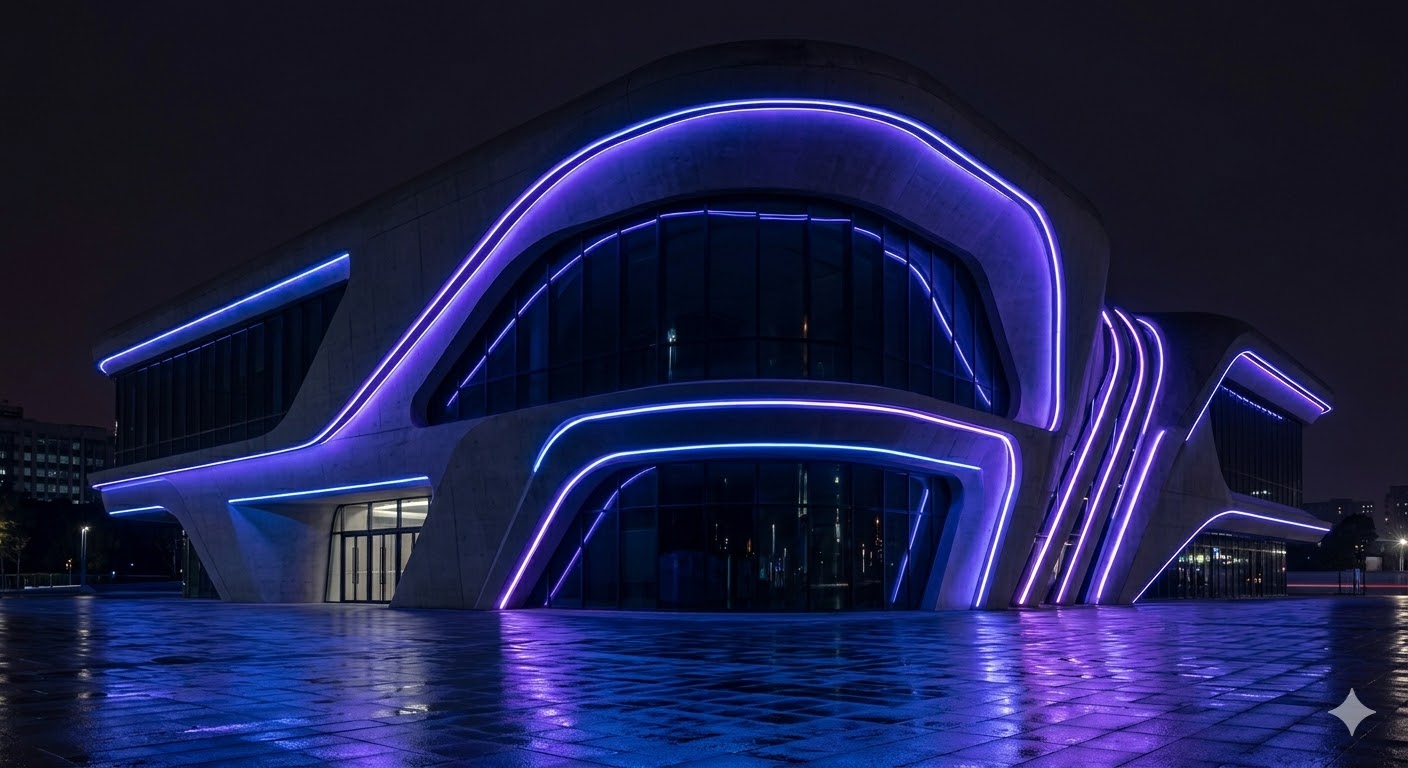
- façade outlining
- structural highlighting
- contour lighting
Commercial and Retail Applications #
- illuminated signage and logos
- branding elements
- display and showroom lighting
Interior Design #
- ambient lighting
- furniture backlighting
- decorative light installations
Outdoor Installations #
- landscape lighting
- terraces and pathways
- event lighting solutions
Installation and System Design Considerations #
Proper system design requires attention to the following:
- correct power supply sizing (minimum 20% reserve capacity)
- adherence to maximum run length per power feed
- adequate thermal management, especially in high-output configurations
- use of compatible connectors, mounting profiles, and accessories
For outdoor applications, proper sealing and moisture protection are essential to ensure long-term reliability.
What is our experience with LED Neon? #
LED Neon products look great and are visually far more appealing than exposed LED strips. However, based on our experience, their overall quality is often quite poor.
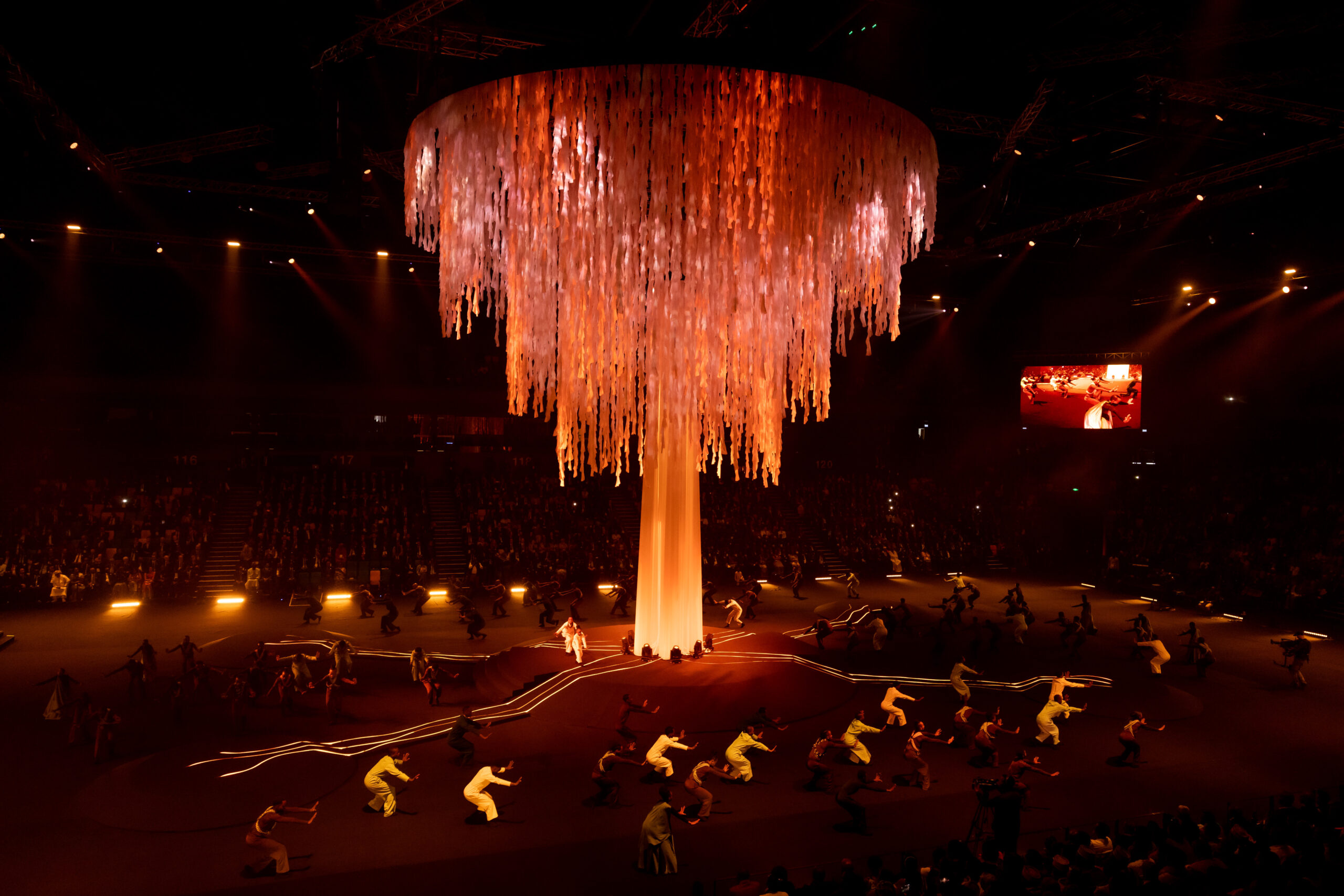
For example, during our Pixel LED tree installation in Rwanda, the client was supplied with 1.5 km of LED Neon. Immediately after unpacking, approximately 10% of the units were already non-functional.
The reason is simple: technically, LED Neon is just an LED strip enclosed in a thick outer casing. When coiled or handled during transport, the strip inside is subjected to mechanical stress, which often leads to damage.
For this reason, whenever a client specifically requires a neon lighting effect, we take a different approach. We source the LED Neon housing separately and combine it with our professional-grade LED strips. During installation, just before mounting, we insert our LED strip into the neon casing on-site, minimizing mechanical stress and significantly improving reliability.
Conclusion #
LED neon systems represent a highly efficient, flexible, and technically advanced solution for linear lighting applications. Their combination of optical uniformity, energy efficiency, and mechanical durability makes them ideal for a wide range of professional use cases.
For projects requiring continuous light output with high reliability and design flexibility, LED Neon Flex is the optimal solution.


