Cabling – Choosing the Right Cables for Your LED Project

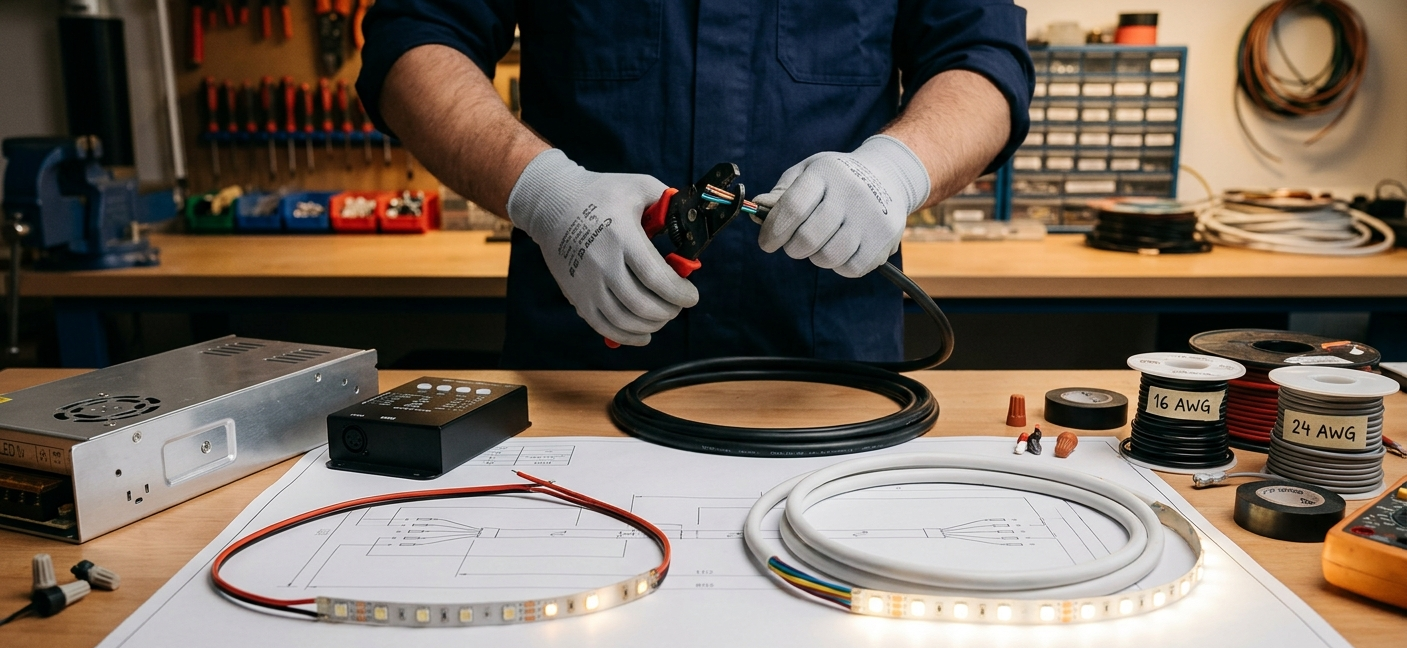
When designing and installing LED lighting, selecting the right cabling is just as important as choosing the LED strips, controllers, or power supplies. Proper cable selection ensures reliable operation, minimizes voltage drop, and significantly extends the lifespan of the entire installation.
Using undersized or low-quality cables can lead to overheating, brightness loss, uneven illumination, and in severe cases, damage to the entire system.
Why Proper Cabling Matters #
LED strips typically operate at low voltage, most commonly 12V or 24V. Over longer cable runs or with higher current loads, voltage drop becomes a critical factor. This can result in reduced brightness, color inconsistency, or poor performance at the far end of the installation.
Correctly sized cables help to:
- Minimize voltage losses
- Ensure stable and consistent performance
- Prevent overheating
- Increase overall system safety
- Extend component lifespan

How to Choose the Correct Cable Size #
The required cable cross-section depends on three main factors:
- Total power consumption
- Cable length
- Operating voltage
A simple rule applies: the higher the current and the longer the cable run, the larger the cable size should be.
Recommended Cable Sizes for LED Installations #
- Up to 5A – 0.75 mm²
- 5A to 10A – 1.5 mm²
- 10A to 16A – 2.5 mm²
- Above 16A – Individual engineering calculation recommended
For larger installations, a precise voltage drop calculation is always recommended.
Types of Cables Used in LED Projects #
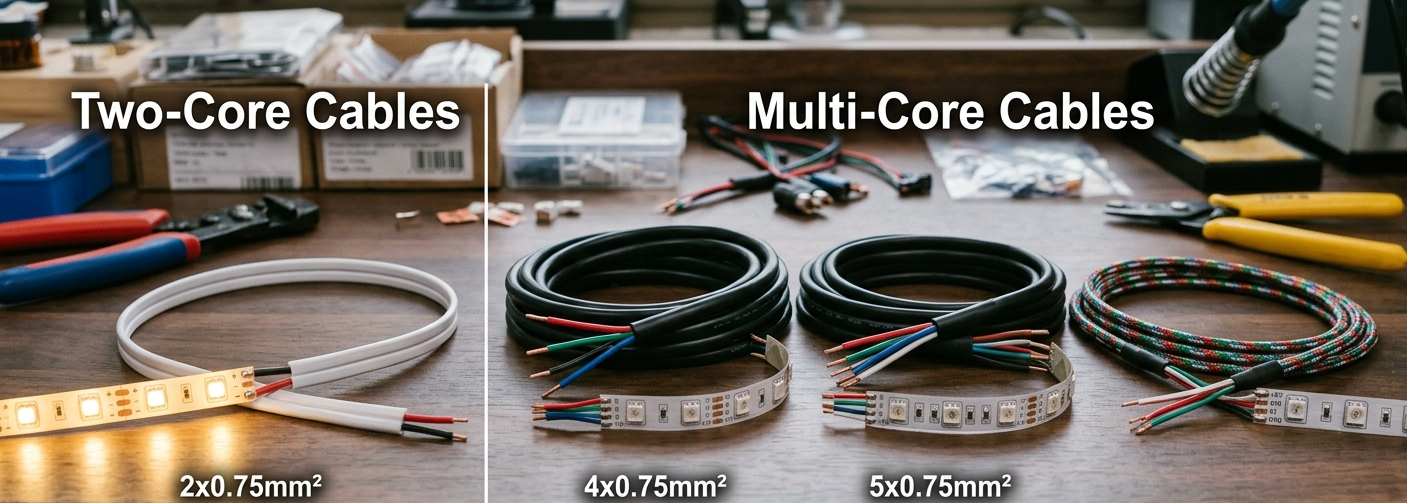
Two-Core Cables #
Ideal for single-color LED strips, where only positive and negative connections are required.
Multi-Core Cables #
RGB, RGBW, and addressable LED strips require additional conductors:
- 4-core cables for RGB LED strips
- 5-core cables for RGBW LED strips
- Specialized data cables for digital and addressable LED systems

Installation Best Practices #
Always design cabling with sufficient reserve capacity. This allows for future expansion and ensures reliable long-term operation.
- Carefully calculate cable run distances
- Use high-quality copper conductors
- Minimize unnecessary connections and joints
- Properly size fuses and circuit protection
- Follow all applicable electrical standards and regulations
Professional Cable Design for Complex Projects #
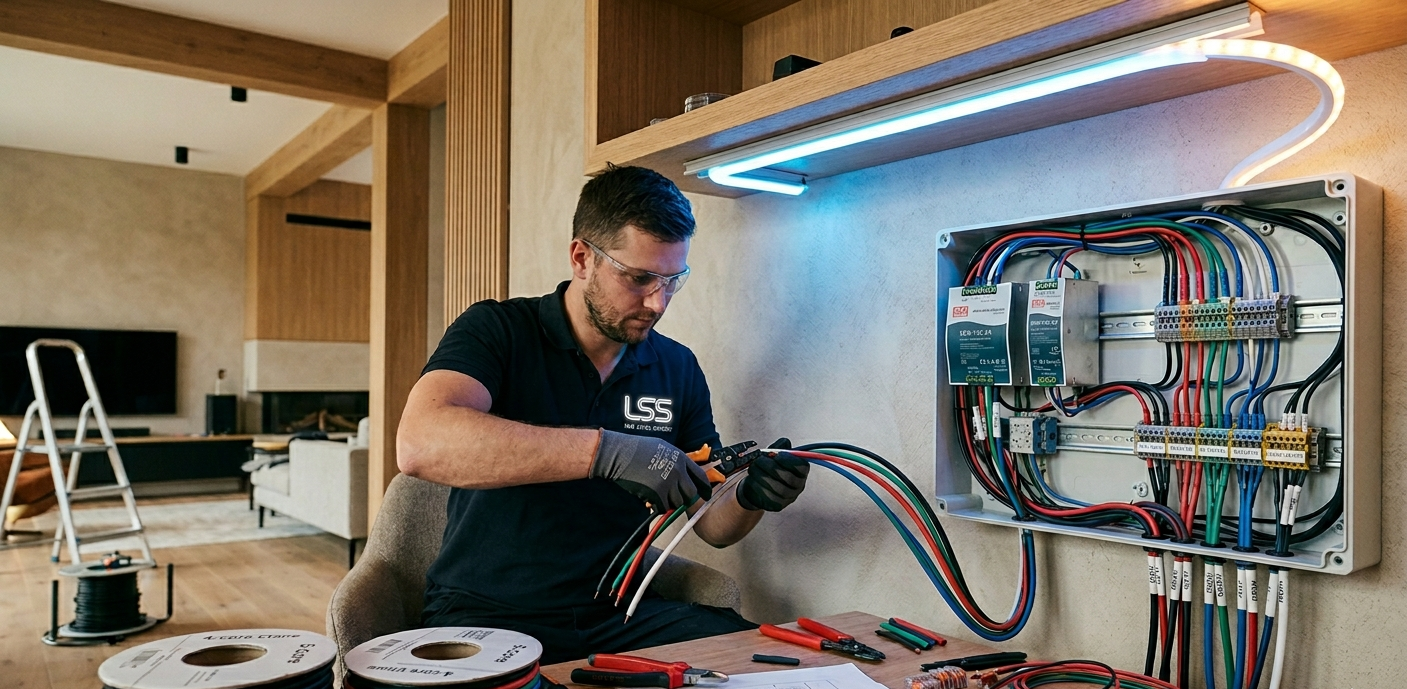
Every LED installation is unique. For larger residential, commercial, hospitality, or architectural lighting projects, professional cable design is essential.
A properly engineered cabling system delivers:
- Maximum performance
- Long-term reliability
- Simplified maintenance
- Enhanced safety
- Optimal energy efficiency
Conclusion #
Cabling forms the foundation of every successful LED installation. Investing in the correct cable selection from the beginning ensures flawless operation, stable performance, and years of trouble-free service.
If you are planning a professional LED project, proper cable design should always be one of the first steps toward a successful installation.