
Choosing the Style of LED Lighting: How Do You Want Your LED Strips to Look?
Choosing the Style of LED Lighting: How Do You Want Your LED Strips to Look? #
When designing LED lighting, it is important to consider not only the power or type of LED strip, but also the visual style and technical setup. Modern LED strips offer many possibilities — from simple white lighting to advanced RGBW systems that allow you to change colors, brightness, and the overall atmosphere of a space.
The right combination of style, LED strip type, and installation method determines whether the result will look professional, modern, or primarily decorative.
Minimalist Lines and Hidden Lighting #
One of the most popular solutions in modern interiors is indirect or hidden LED lighting. LED strips are installed in aluminum profiles or drywall ceiling recesses so that the strip itself is not directly visible.
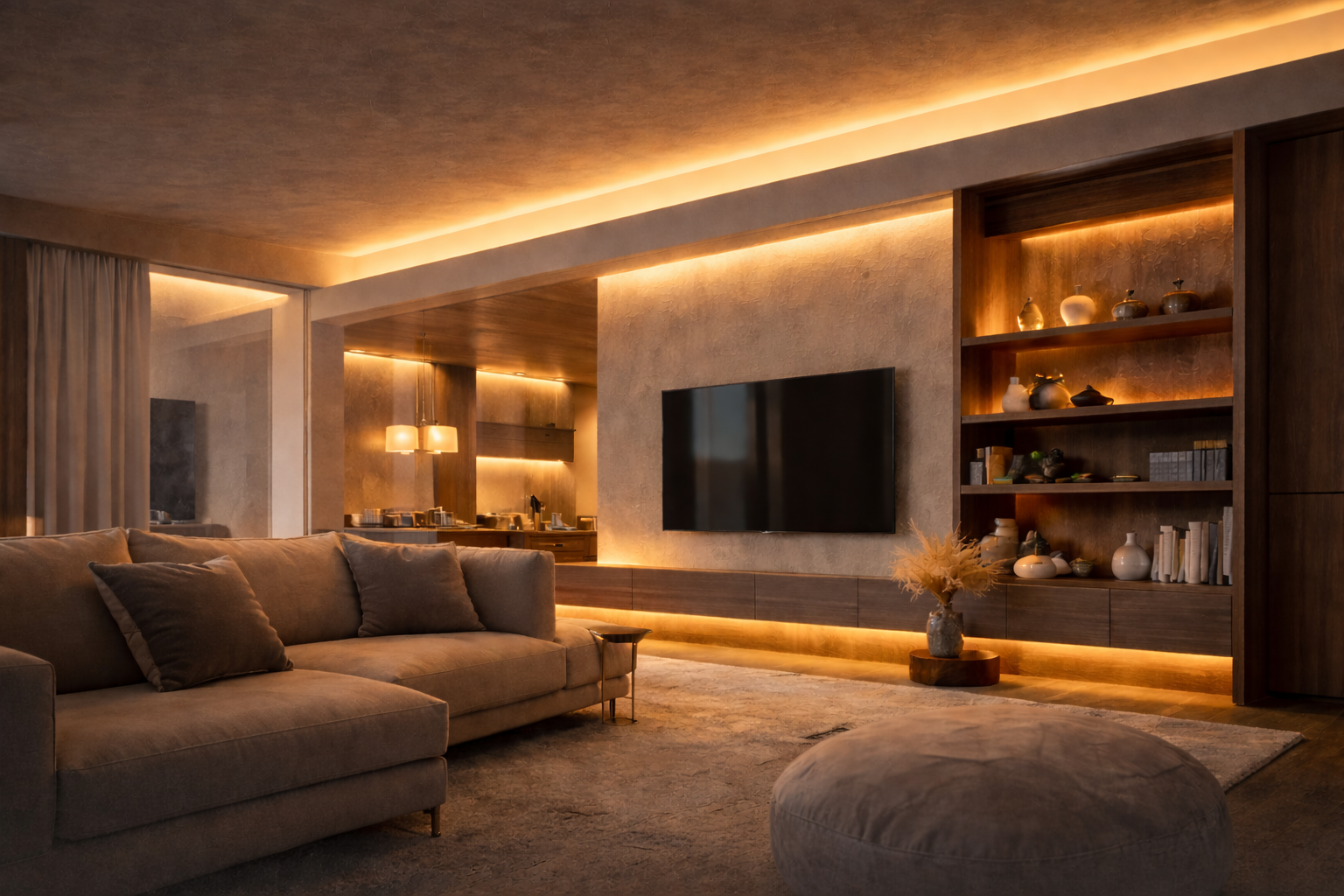
Common Technical Solutions #
- 24V LED strips – more stable power distribution over longer distances
- LED density of 120 – 240 LEDs per meter for a smooth light line
- Aluminum profiles with diffusers to evenly distribute the light
Typical Applications #
- ceiling coves
- wall backlighting
- furniture illumination
- architectural light lines
The result is a clean and elegant design without visible light points.
Dynamic RGB and RGBW Lighting #
If you want LED lighting to become a strong design feature, RGB or RGBW LED strips are a great choice.
RGB strips contain three primary colors:
- Red
- Green
- Blue
By mixing these colors, a wide range of lighting effects can be created. RGBW strips also include a dedicated white LED chip, which produces a much cleaner and more natural white light compared to RGB mixing.
Advantages of RGBW Systems #
- high-quality pure white light
- ability to combine decorative colors with functional lighting
- greater flexibility in interior design
Control Options #
- RGB / RGBW LED controllers
- remote controls
- mobile apps
- integration with smart home systems
Typical Applications #
- modern living rooms
- gaming rooms
- bars and restaurants
- showrooms and commercial spaces
Functional Task Lighting #
LED strips are also commonly used as practical task lighting, especially in kitchens or workspaces.
Important Technical Parameters #
- luminous flux (lm/m)
- color temperature (Kelvin)
- CRI (Color Rendering Index)
Common Technical Solutions #
- 4000K neutral white – ideal for work areas
- LED strips with 14 – 20 W/m power consumption
- aluminum profiles with diffusers for even lighting
Properly designed task lighting reduces eye strain and improves comfort when working.
Decorative and Ambient Lighting #
LED strips are also perfect for creating ambient lighting, which complements the main lighting and creates a pleasant atmosphere.
Common Applications #
- TV backlighting
- bed underglow lighting
- stair lighting
- glass cabinets and shelves
- furniture backlighting
For decorative lighting, commonly used options include:
- dimmable LED strips
- warm white light (2700K – 3000K)
- RGBW strips for changing the mood and atmosphere
Technical Planning Is Essential #
To ensure LED lighting works reliably and looks professional, it is important to consider several technical aspects:
- choosing the correct power supply capacity
- selecting an appropriate aluminum profile for heat dissipation
- implementing proper dimming and lighting control
- planning the correct power injection points for longer LED runs
A well-designed system ensures not only a great visual effect but also a long lifespan for the LED installation.
Think About the Final Effect #
Before installing LED strips, ask yourself a simple question:
Should the LED lighting be a dominant design feature or a subtle addition to the space?
The right combination of technology, power, and design will allow you to create lighting that is not only visually impressive but also practical and reliable.


