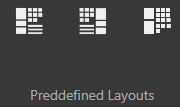
Main Window Layouts
Switch layouts to match your task
The LSS4 main window can be arranged in multiple ways depending on what you're working on. During show programming, you might want the scene banks front and center with the timeline expanded below. During content creation, you might want the video preview larger with the layer controls visible. The layout system lets you switch between these arrangements instantly without rearranging panels manually every time.
Layouts are also practical for different screen resolutions. A layout designed for a 27-inch desktop monitor is different from one that works well on a 13-inch laptop. LSS4 accommodates both — useful when you're creating content on a large monitor at the studio and running the show on a compact machine at the venue.
- Multiple layout presets for the main window
- Switch layouts without losing your project state
- Optimized for different tasks: content creation, show control, mapping
- Works on single monitor and multi-monitor setups
- Compact layout suitable for laptop screens
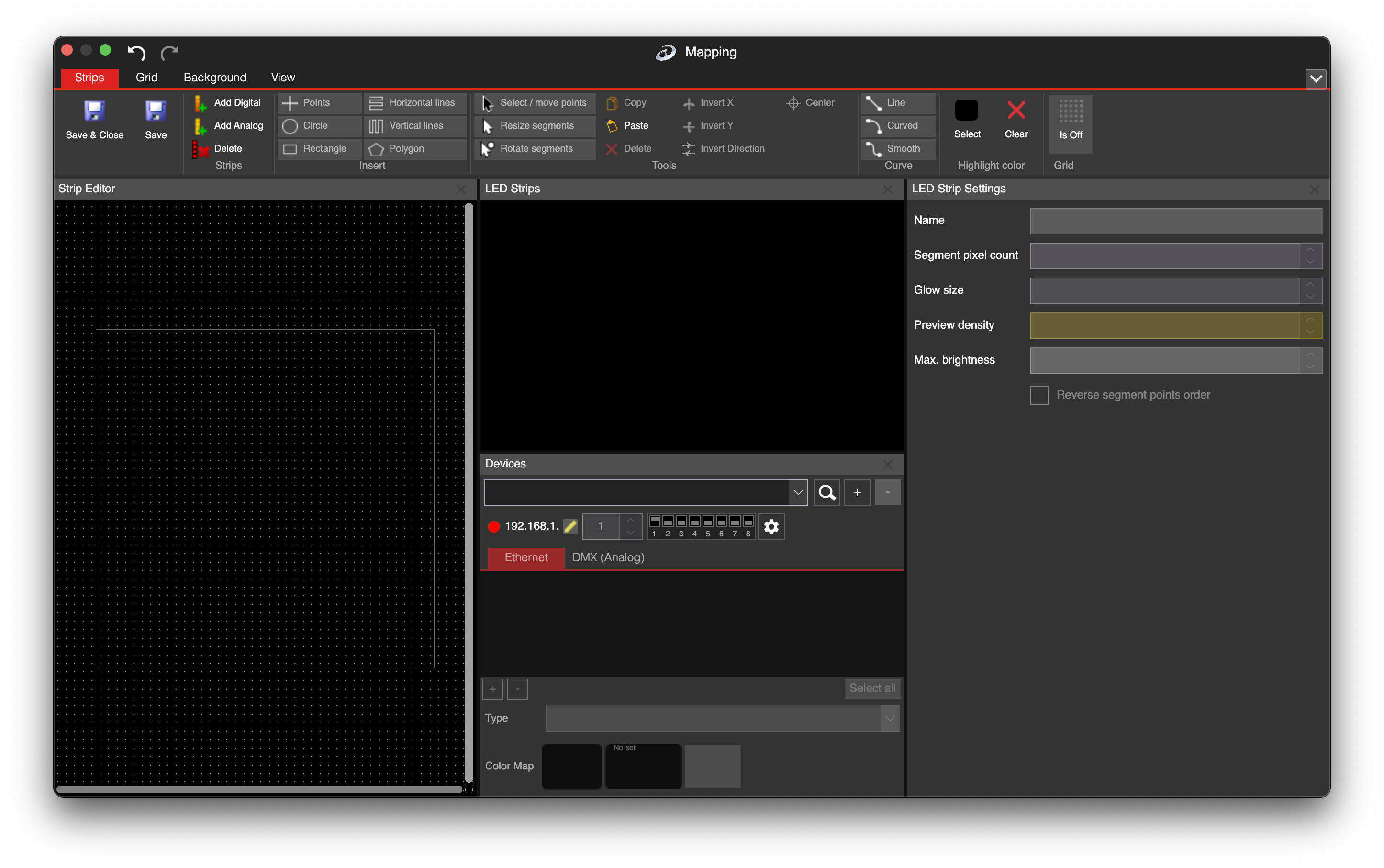
Mapping Window Layouts
More canvas space when you need it
The mapping workspace is where you spend most of your time when building a new installation. The layout controls in the mapping window let you maximize the canvas area for complex layouts, or bring side panels into view when you need to reference segment properties, device settings, or the pixel assignment list. For large pixel grids — 50,000+ pixels across multiple devices — having the full canvas available matters.
The mapping window also supports a dedicated dual-monitor layout, where the canvas extends across both screens. This gives you a much larger working area and lets you keep tool palettes and property panels on the secondary screen without crowding the canvas.
- Maximize canvas area for complex mapping work
- Show/hide side panels as needed
- Dual-monitor layout: canvas on primary, panels on secondary
- Toggle panel visibility without closing them
- Layout remembered per project for consistent experience