Phase Editor
Control scene speed and acceleration
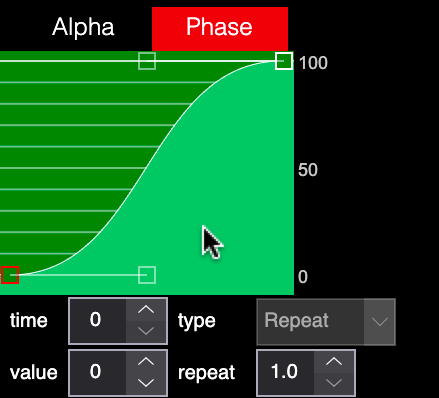
The Phase editor lets you define how a scene's animation plays during the event's duration in the show timeline. Instead of playing the scene at a fixed speed from start to finish, you can ramp up, slow down, or create complex speed curves — all within a single event.
This is particularly powerful for effects-heavy shows where you want the visual tempo of the lighting to match the energy of the music or performance. Accelerate into a drop, decelerate into a breakdown, hold steady during a verse. The phase editor gives you that choreographic control without needing separate scenes for each tempo.
- Define speed and acceleration curves for each event
- Speed up, slow down, or hold a scene at any point
- Create complex velocity curves with multiple control points
- Preview phase behavior before committing to the show
Transparency Editor
Smooth fade-in and fade-out animations
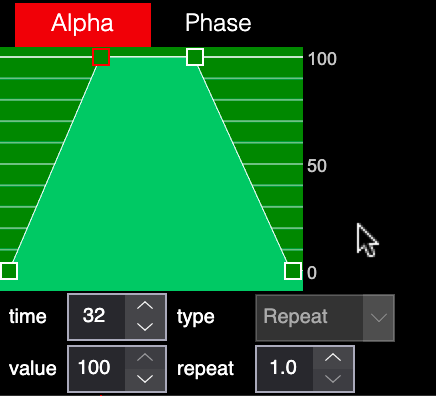
The transparency editor controls the opacity of a scene event over time in the show timeline. A simple fade-in at the start and fade-out at the end makes scene transitions feel smooth and professional instead of abrupt. But you can also create complex transparency curves — gradually revealing a scene, holding at partial opacity for a layered look, or creating pulse effects.
When combined with multiple tracks in the timeline, overlapping events with different transparency curves create beautiful crossfade transitions between scenes. It's the same technique used in professional video editing — applied to your LED show.
- Define opacity over time for each event
- Fade-in at event start, fade-out at event end
- Complex transparency curves with multiple keyframe points
- Create crossfades by overlapping events with complementary curves
- Combine with phase editor for fully choreographed events
Event Management
The complete event editing workflow
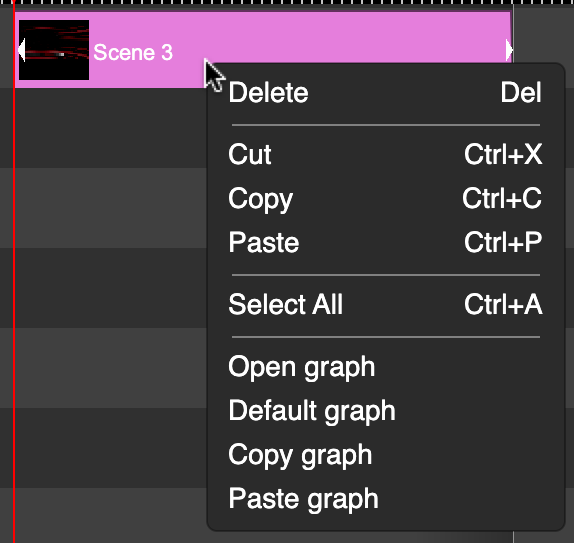
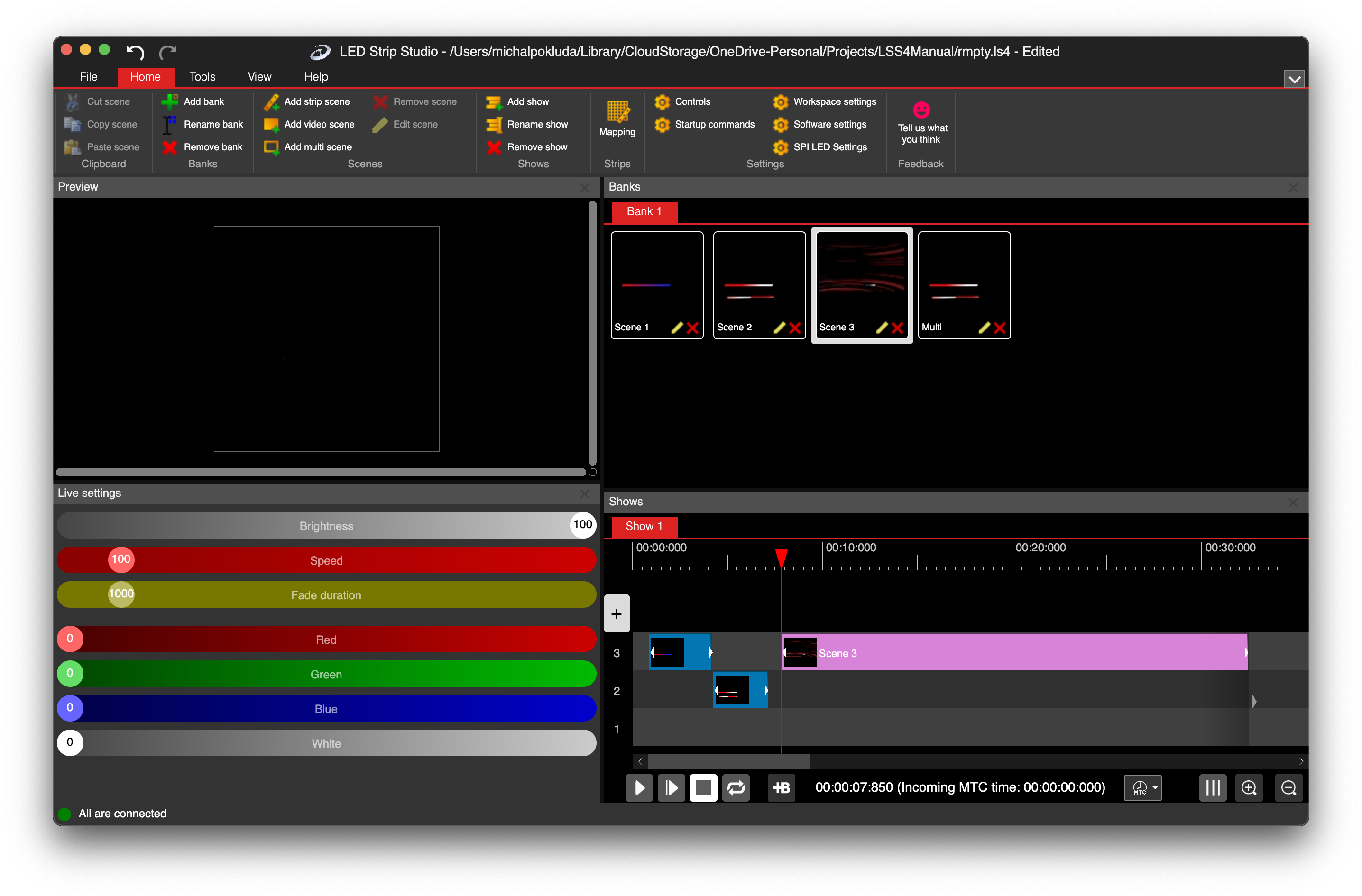
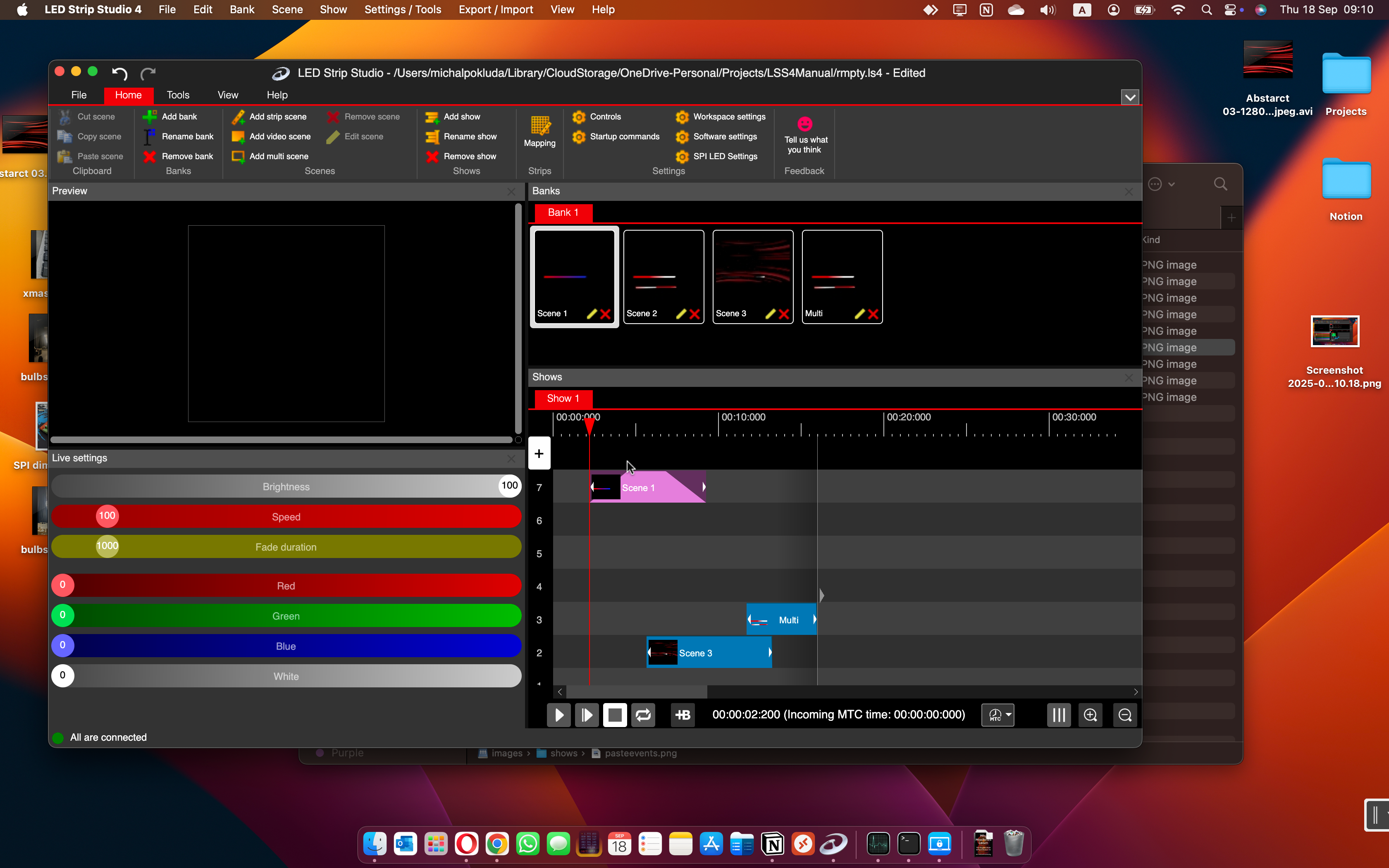
Each event in the show timeline represents a scene playing during a specific time window. Events can be added from the main menu, positioned by dragging, and resized by adjusting start/end handles. The event context menu gives you access to copy, paste, and duplicate operations for quickly building out complex show structures.
- Add events from scene banks with a simple click
- Drag to reposition, resize to adjust duration
- Copy and paste events for repeated sections
- Left and right triangle handles for fine-tuning event boundaries
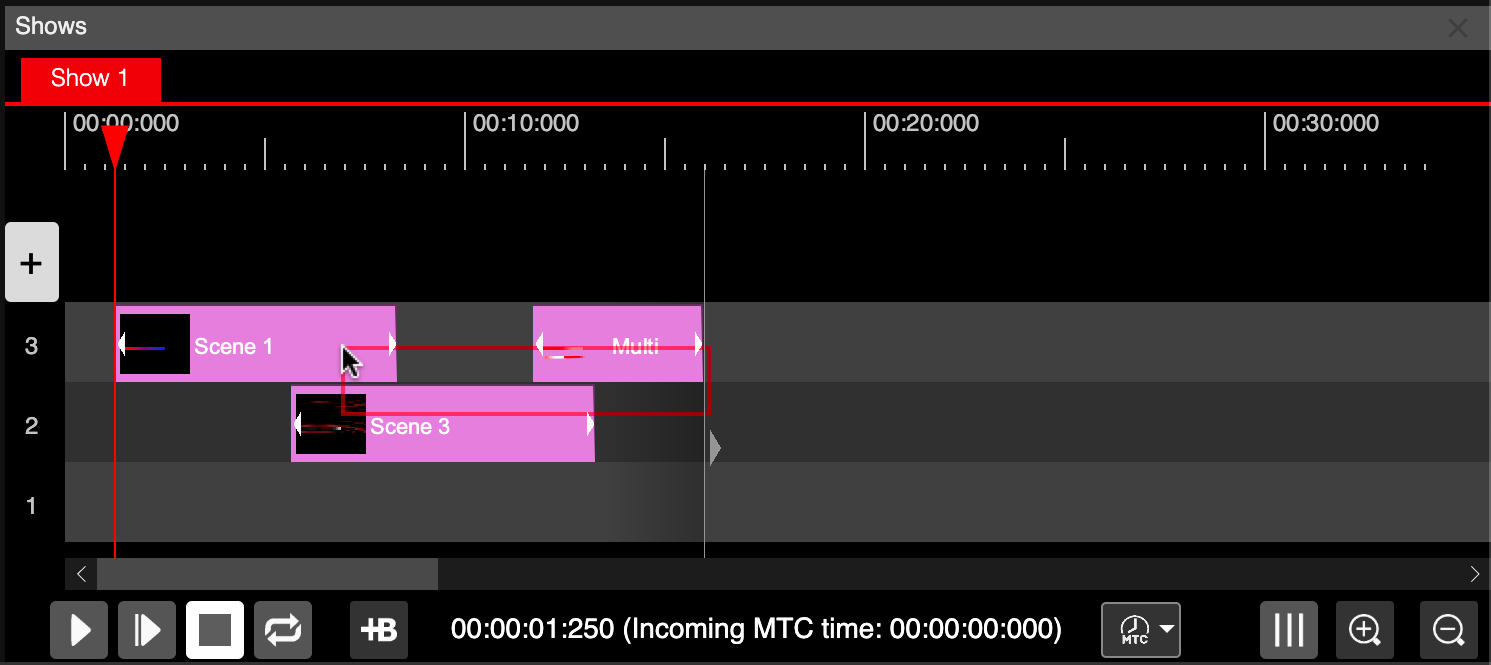
- Select multiple events with a selection rectangle