Installations
How Does Hospitality LED Lighting Work in Bars and Restaurants?
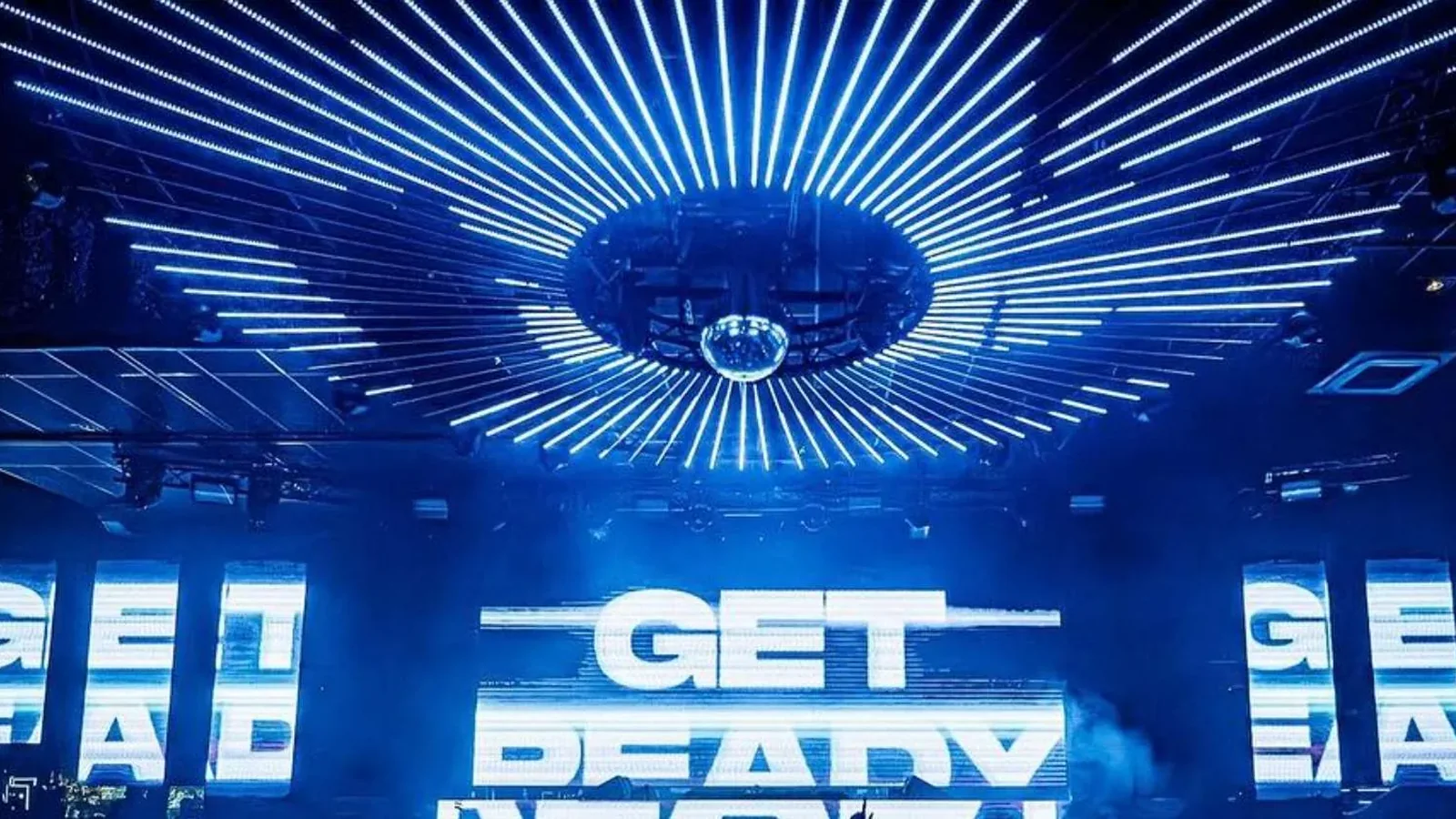
Hospitality LED lighting has moved beyond one warm wash switched on at opening time. In bars, restaurants, coffee shops and clubs, addressable pixel LEDs let a single installation change its mood from lunch service to late night without touching a fixture. This article explains where pixel LEDs work in a venue, which controllers suit which space, and how staff run the lighting every day.
It is written for venue owners, interior designers and integrators planning a new fit-out or a refurbishment. The same principles run through the hospitality projects on our Solutions page, from small bars to the largest club in the Czech Republic.
What Is Hospitality LED Lighting?
Hospitality LED lighting is lighting designed for venues where guests stay for hours: bars, restaurants, cafés, lounges and clubs. The pixel LED version uses addressable strips, where every LED or small group of LEDs has its own colour and brightness. A controller turns network or SD card data into those values, and software decides what the room shows at any moment.
The practical difference is time. A static strip gives one look for the whole day. A pixel installation can run a calm, warm scene for breakfast and a brighter one for lunch service. In the evening it adds slow colour movement behind the bar, all from the same hardware.
Where Does Pixel LED Lighting Work Best in a Venue?
Each type of venue uses pixel LEDs differently. The guests, the time they spend inside and the activity in the room decide how bold the lighting can be.
How Do Bars Use Back-Bar and Counter Lighting?
The back bar is the focal point of most bars, so it is where pixel LEDs earn their cost first. Strips under glass shelves light the bottles from below, and a line along the counter front ties the whole bar together. Because every pixel is addressable, the shelves can hold a brand colour during service and switch to a slow effect when the music changes.
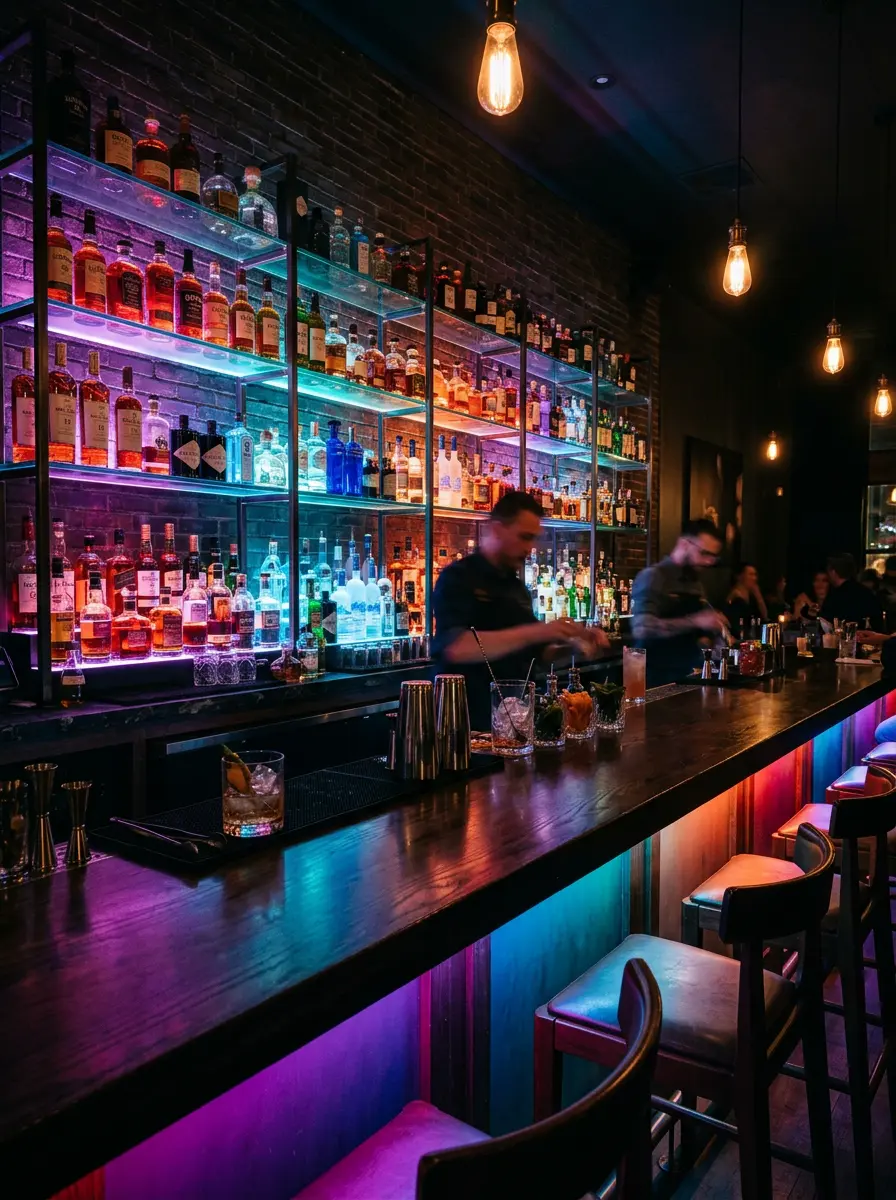 Visualisation of back-bar shelf and counter lighting.
What Suits Restaurants, Coffee Shops and Terraces?
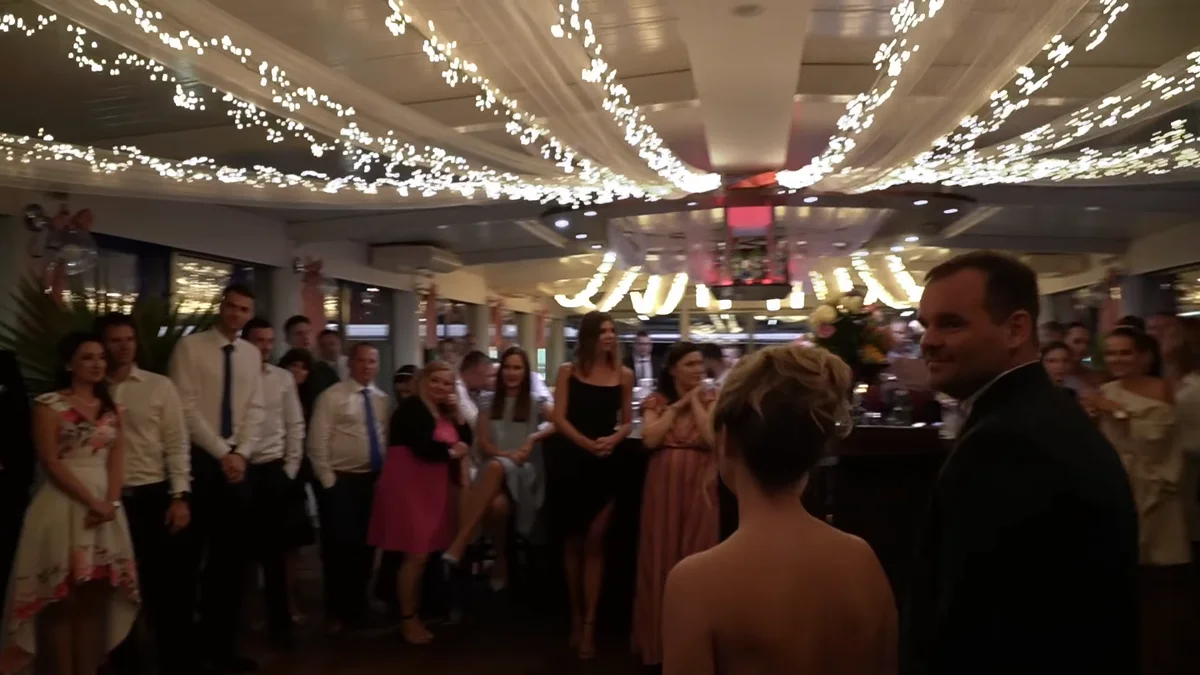
Restaurants and coffee shops need light that flatters food and faces, so effects stay subtle. Warm white scenes carry most of the day, and colour is kept for accents such as a ceiling line or a feature wall. On terraces and in event halls, festoon lights with CCT bulbs switch between a warm evening look and brighter white for set-up. How that works over DMX is explained in dimmable festoon lights for weddings and terraces.
How Do Clubs and Lounges Use Pixel LEDs Differently?
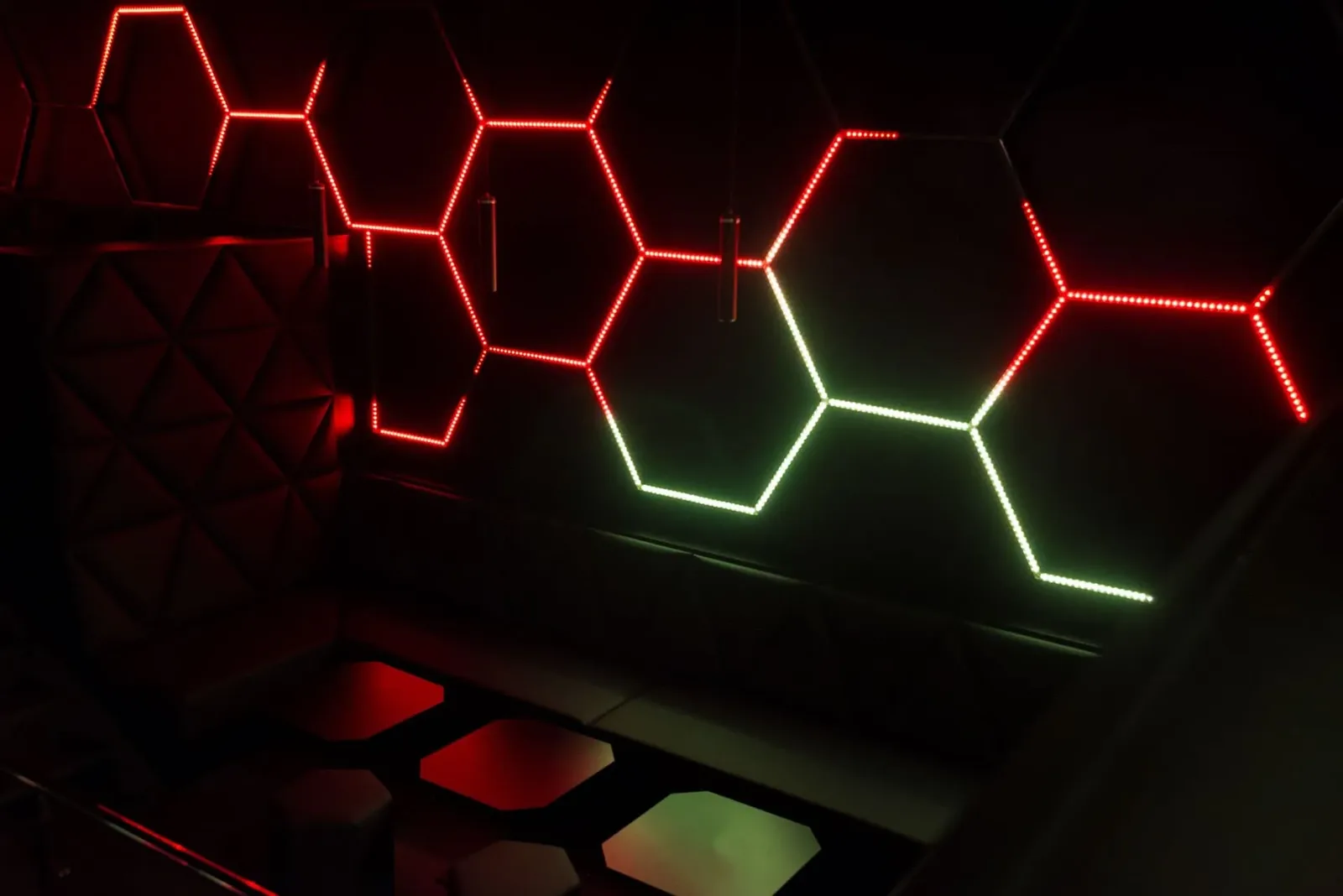
Clubs push much further. Pixel lines follow the architecture, and the show runs with the music all night. In one Bratislava club, custom hexagonal aluminium profiles with LED rods run on an LEC3 Ethernet controller and LED Strip Studio. The full planning process is described in dynamic LED lighting for nightclubs.
Case Study: A 5-Metre LED Sun at Epic Club Prague
Epic is the largest club in the Czech Republic. Its main room is built around a circle five metres across, made of 80 addressable strip segments that run outwards like the rays of the sun. The circle has become the signature image of the venue and appears in almost every photo and video from the club.
The VJ works in Resolume Arena. Spout passes the picture to LED Strip Studio on the same Windows PC, where the 80 rays are mapped exactly as they hang, and LEC3 controllers drive the strips. The sun and the LED walls play from one Resolume session, so they never drift apart.
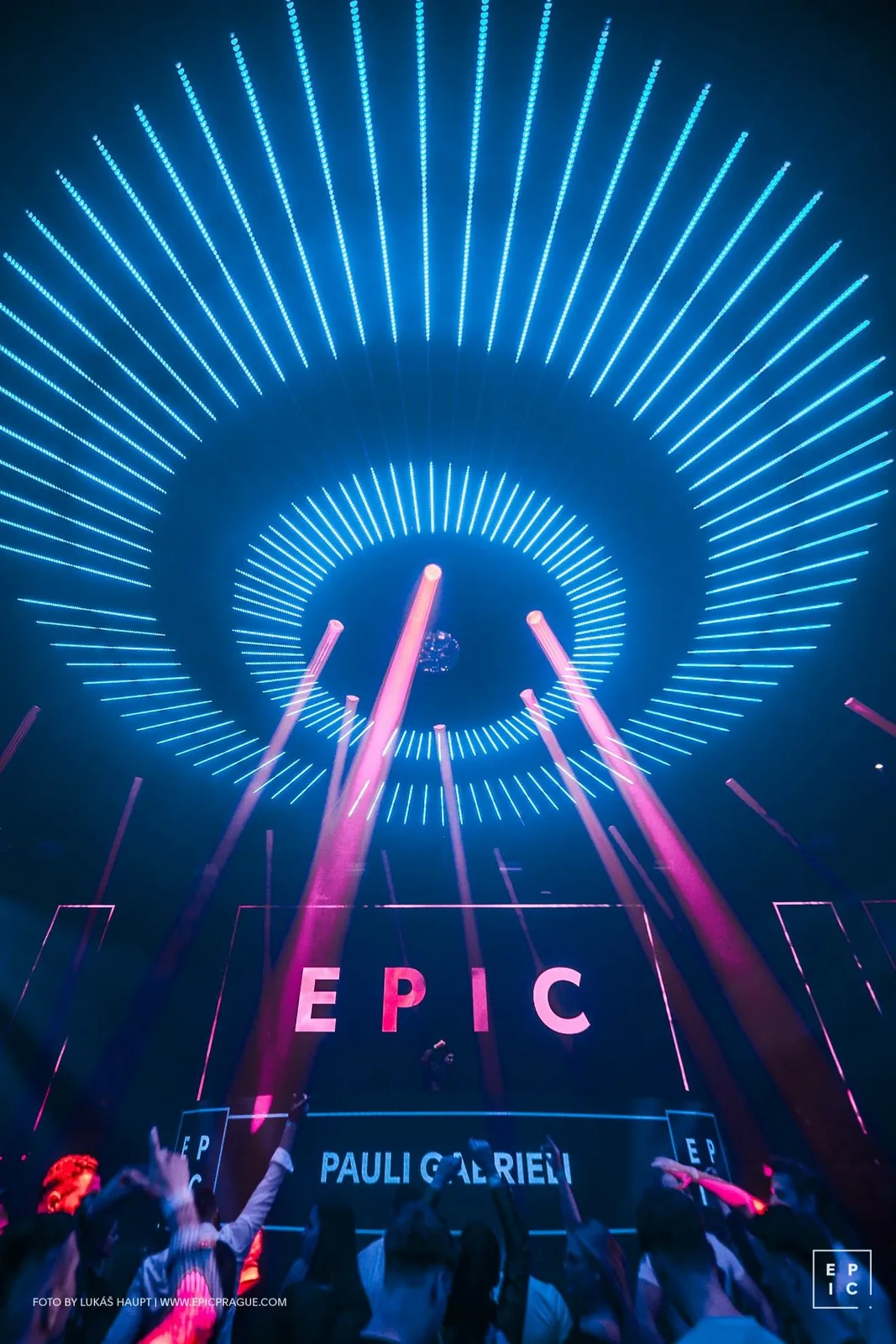
One lesson from Epic applies to every venue. A pixel floor installed at first was later removed, because cleaning water got into the profiles. Wherever guests or cleaning crews meet the lights, sealed profiles and IP67 strips are a requirement, not an upgrade. More photos and figures are on the Epic Club Prague project page.
Which LED Controller Suits a Bar, Restaurant or Club?
The right controller follows the size of the installation and who operates it. The table compares the options we recommend most often for hospitality projects.
| Reactivo 2 | SPI LED Controller | LEC3 | Powered Bulb Dimmer | |
|---|---|---|---|---|
| Best for | Bars, cafés, interactive corners | Fixed scenes and accent lines | Clubs, large ceilings and walls | Festoon and bulb lines |
| Capacity | 1,024 RGB / 768 RGBW pixels | 1,024 RGB / 768 RGBW pixels | 4,096 RGB / 3,072 RGBW pixels | 64 dimmable outputs |
| Control | Wi-Fi or Ethernet, LSS Remote app | SD card, buttons, DMX512 | Art-Net, sACN, LED Strip Studio | SPI signal from LEC3 or SPI Matrix |
| Runs without a PC | Yes, from its SD card | Yes, from its SD card | Yes, from its SD card | Follows its controller |
Reactivo 2 is the usual choice for a single bar or café, because it reacts to buttons and sensors and staff can run it from a phone. The SPI LED Controller fits simple accent lines with a few fixed scenes. For bulb and festoon lines, the Powered Bulb Dimmer adds 64 dimmable outputs to an LEC3 or SPI Matrix.
Larger venues often need several controllers. They can play as one show over Ethernet or DMX, as explained in multi-device synchronization.
How Do Staff Run the Lighting Every Night?
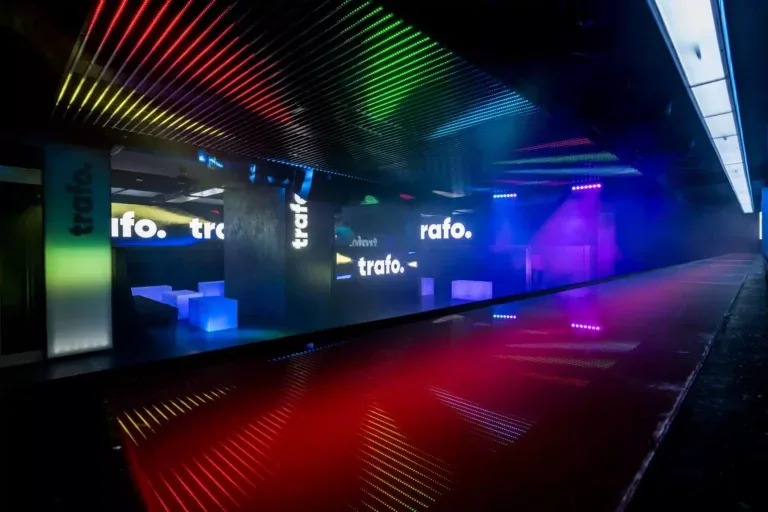
Most venues have no lighting operator, so the system has to run itself. Scenes are built once in LED Strip Studio and exported to the controller’s SD card. After that, the installation plays on its own and can start its default scene as soon as the power comes on.
Staff then change scenes in whichever way suits the venue:
- Wall buttons and smart switches send HTTP commands to change the scene.
- The LSS Remote app lets staff pick animations, speed and brightness from a phone.
- A DMX desk triggers stored scenes in clubs that already have one.
- Hardware buttons on the SPI LED Controller switch between stored effects.
Keep the number of saved scenes small. In our experience, three to five well-named scenes cover a typical day, and staff will actually use them.
Which Mistakes Should Venues Avoid?
Most hospitality lighting problems we are asked to fix come from planning, not from faulty hardware.
- Glare at eye level. Pixels seen directly from a seat tire guests quickly, so use diffusers and indirect lines.
- Too many effects. Constant movement works on a dance floor, not over a dinner table.
- No moisture planning. Floors, counters and terraces need sealed profiles and suitable IP ratings.
- No handover. If staff cannot recall a scene in seconds, the venue stays on one look forever.
- Undersized power. Long runs without planned power injection show colour shifts and dim ends.
Planning lighting for a bar, restaurant or club? Book a free consultation and we will help you choose the controllers, scenes and installation details for your venue.
Summary
Hospitality LED lighting uses addressable pixel LEDs, so one installation can change its look through the day. Bars light back-bar shelves and counters, restaurants and cafés keep scenes warm and subtle, and clubs let the light follow the architecture and the music. At Epic Club Prague, 80 strip segments form a 5 m LED sun driven by LEC3 controllers and LED Strip Studio. Reactivo 2 suits a single bar, LEC3 a large club, and the Powered Bulb Dimmer festoon and bulb lines. Scenes play from the controller's SD card without a PC, and staff switch them with buttons or the LSS Remote app.