Installations
How Is Pixel LED for TV Studios Planned and Built?
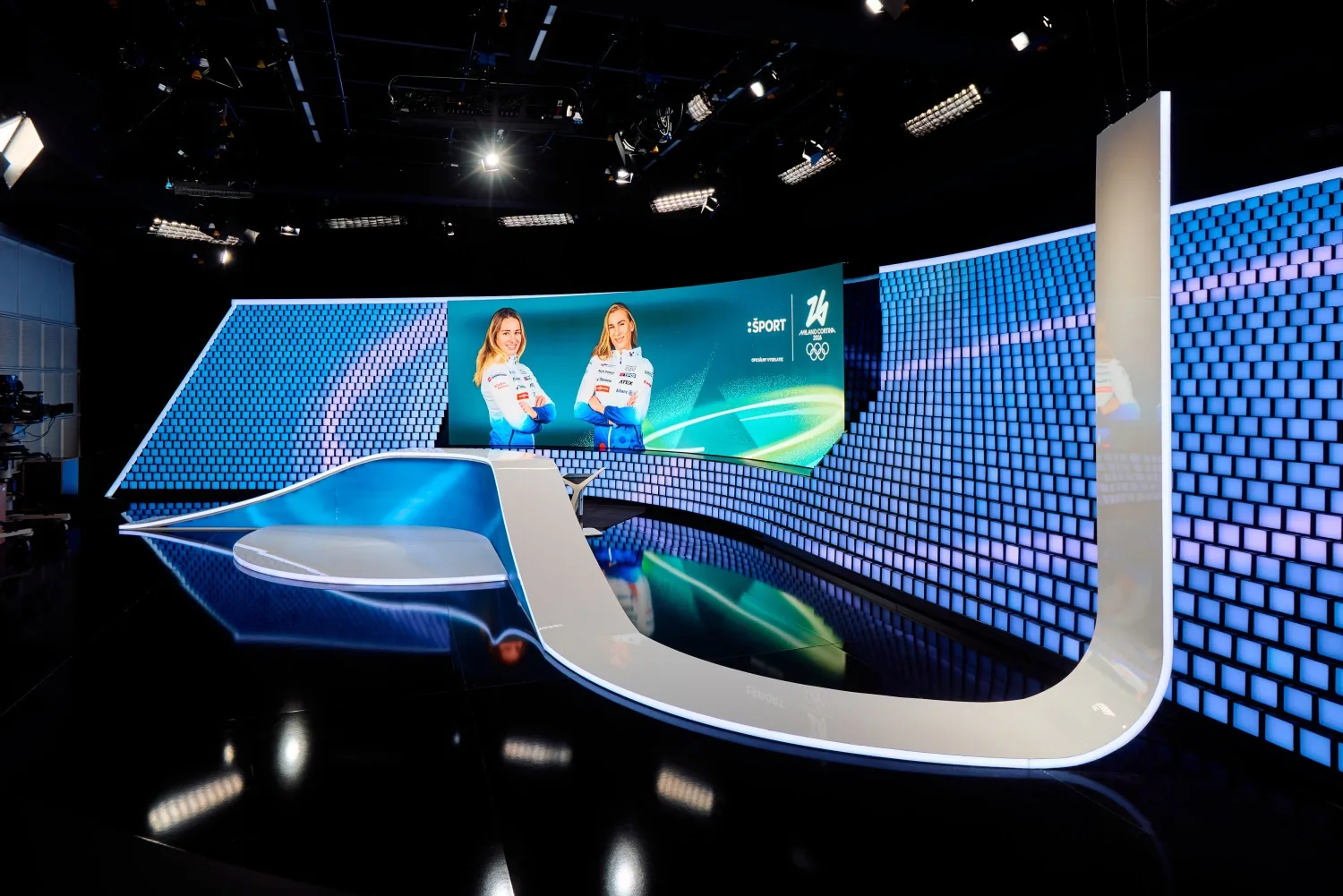
A TV studio is the only room where lighting is judged by a machine. The camera, not the human eye, decides whether a set looks right, and it exaggerates every reflection, colour shift and dim segment. Pixel LED for TV studios answers that problem with scenic lighting in which every LED holds its own colour and every look lives in software.
This article explains what broadcast sets really need, because news rooms, game shows and talk shows each ask for something different. It then uses the numbers from our largest TV build and a recent Olympic studio to show how control and power are sized. It is written for broadcast engineers, set designers and integrators.
What Is Pixel LED for TV Studios?
Pixel LED for TV studios is scenic lighting built into the set itself, in which every LED is addressed individually and driven from software. It is separate from the key and fill lights that light the presenters. Its job is to shape the look of the set on camera, not to make faces visible.
The difference from conventional set lighting is control granularity. A dimmed or single-colour strip behaves as one fixture, so the set has one look until someone rewires it. In an addressable system each pixel carries its own value, and a pixel LED controller turns network data into those values. The entire set can then be restyled between two programmes.
That matters because a modern studio is shared. One space carries several shows a day, each with its own brand colours and mood. The hardware stays; only the content changes. Temporary sets for films, commercials and music videos face the same camera on a shorter timeline, as our guide to pixel LED for video production explains.
What Do News Rooms, Game Shows and Talk Shows Need?
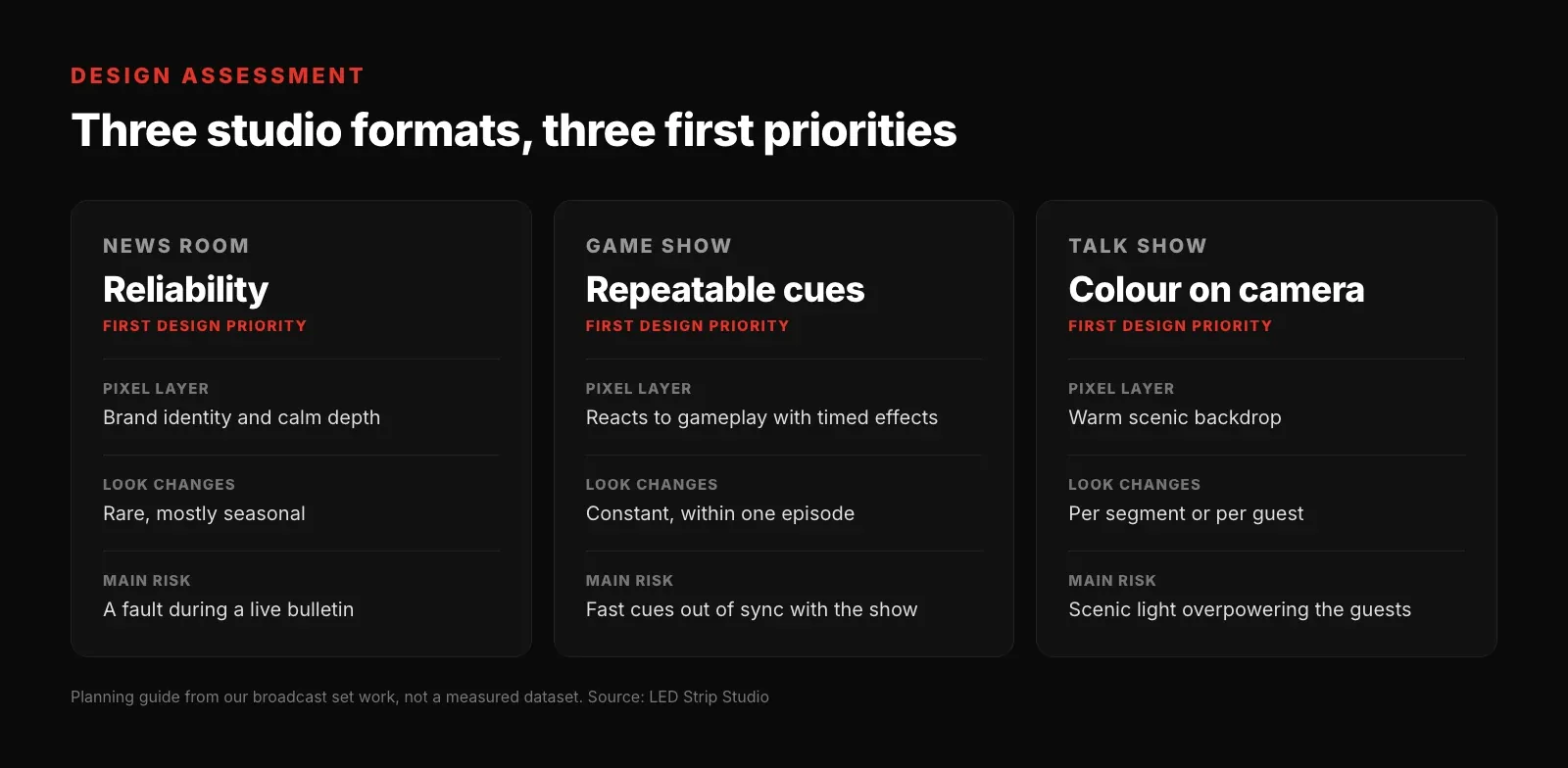
The three formats put opposite demands on the same technology. The comparison below is our design assessment from broadcast set work, not a measured dataset, so treat it as a planning guide rather than a specification.
| Criterion | News room | Game show | Talk show |
|---|---|---|---|
| Typical broadcast pattern | Long daily blocks, year-round | Blocks of episodes, studio audience present | Weekly episodes, guest-driven |
| Main role of the pixel layer | Brand identity and calm depth | Reaction to gameplay, timed effects | Warm scenic backdrop, segment changes |
| Frequency of look changes | Rare, mostly seasonal | Constant, within a single episode | Per segment or per guest |
| Dominant technical risk | A fault during a live bulletin | Fast cues out of sync with the show | Scenic light overpowering the guests |
| First design priority | Redundancy and serviceability | Deterministic, repeatable playback | Colour quality and low glare |
Why Does a News Room Ask for the Most Reliability?
A news set runs for hours every day and cannot go dark for a single bulletin. There is no rehearsal window and no maintenance slot between programmes, so a failed segment is visible to the audience immediately.
Practically, that means service access designed before the set is closed, spare controller capacity for repairs, and a set look that degrades gracefully. A pixel chip with a backup data line, such as WS2815, keeps the rest of a chain running if one pixel fails on air. We also leave headroom on every controller rather than filling it; in the news studio described below, about 18 % stayed free for later set changes.
What Makes Game Show Lighting Different?
A game show asks the light to react: a correct answer, a buzzer, a countdown. The pixel layer becomes part of the show’s timing, so cues must fire the same way in every take.
This is a software question more than a hardware one. The pixel map has to describe where each LED physically sits, so an effect can travel across the set instead of just along a cable. Scenes are prepared in LED Strip Studio pixel mapping software, which can follow MIDI timecode from the show’s playback system. LEC3 can also start effects stored on its SD card from a DMX cue, as our guide to DMX-triggered LED effects explains.
How Does a Talk Show Use Pixel LED?
A talk show set is mostly about the people in it, so the pixel layer works as a backdrop rather than an effect. Colour depth and contrast on camera matter more than speed.
Here the diffuser choice decides the result. A dark diffuser produces deeper colour and fewer reflections behind the guests, at the cost of brightness. That is the trade-off we ran into on the news build described below.
 Source: LED Strip Studio
Case Study: What Did 84,000 Pixels Teach Us?
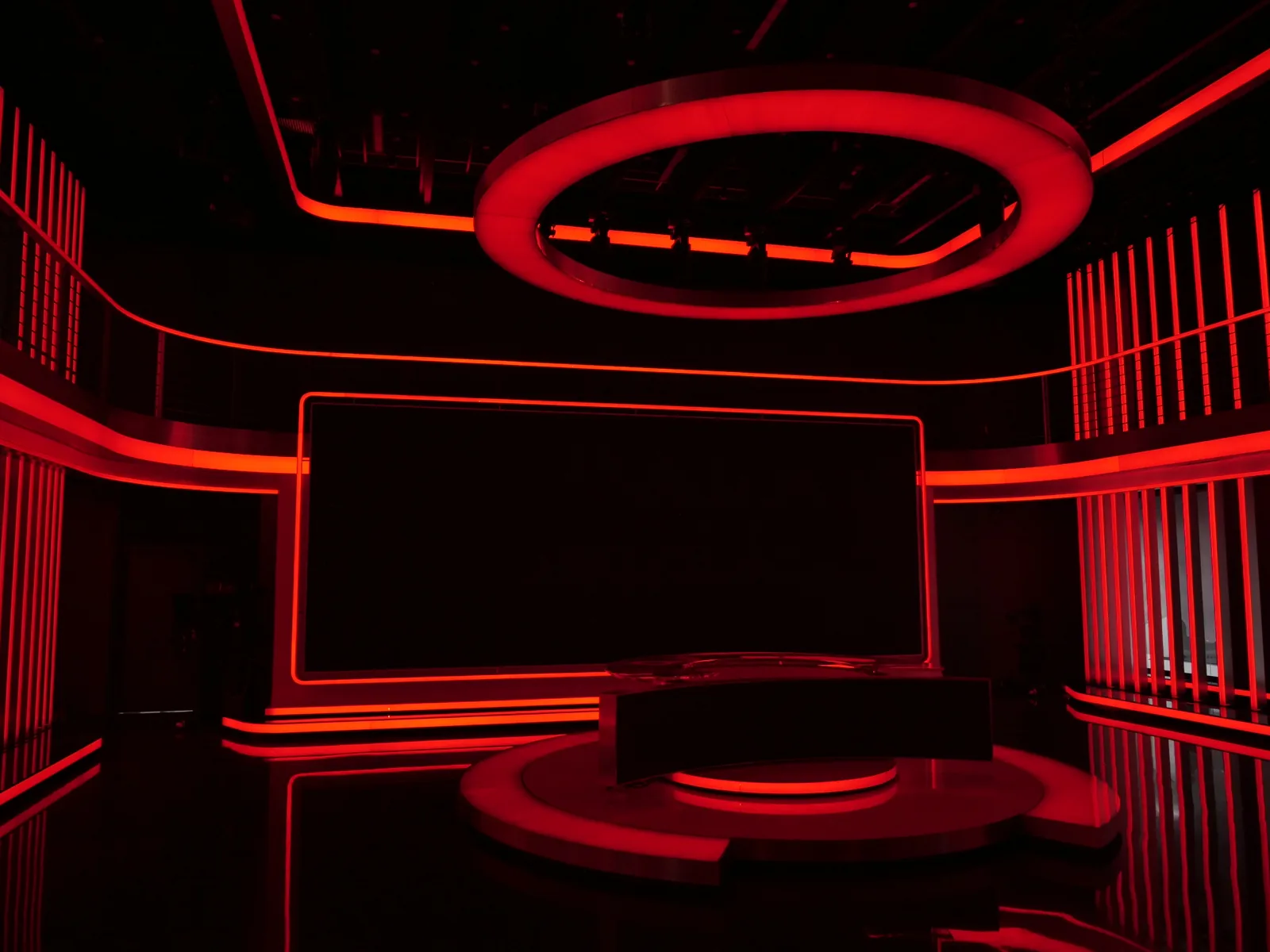
The largest broadcast set we have built is the CNN Prima NEWS studio in Prague. It is a two-level “double-decker” news studio more than 8 metres high, lit with pixel LED strips and backed by a P10 LED horizon. The figures below come from our project records; values marked as calculated are derived by us.
| Parameter | Value |
|---|---|
| Pixel LED strips | approx. 1.4–1.5 km, 60 LEDs/m |
| Individually addressable RGB pixels | approx. 84,000 |
| Pixel controllers | 25 × LED Ethernet Controller 3 PRO, 4,096-pixel version |
| Total controller capacity | 102,400 pixels, about 82 % used (calculated) |
| Diffuser | Black plexiglass, two LED strips per light segment |
| LED horizon | More than 170 m² of P10 LED screen panels |
| Power supplies | 500+, fan-less, 150 W each |
| Power start-up | AC delay devices, 1–25 s delay per supply |
| Control computer | 1 × laptop with Intel Core i5 |
| Preparation / installation | 1 year / 3 months |
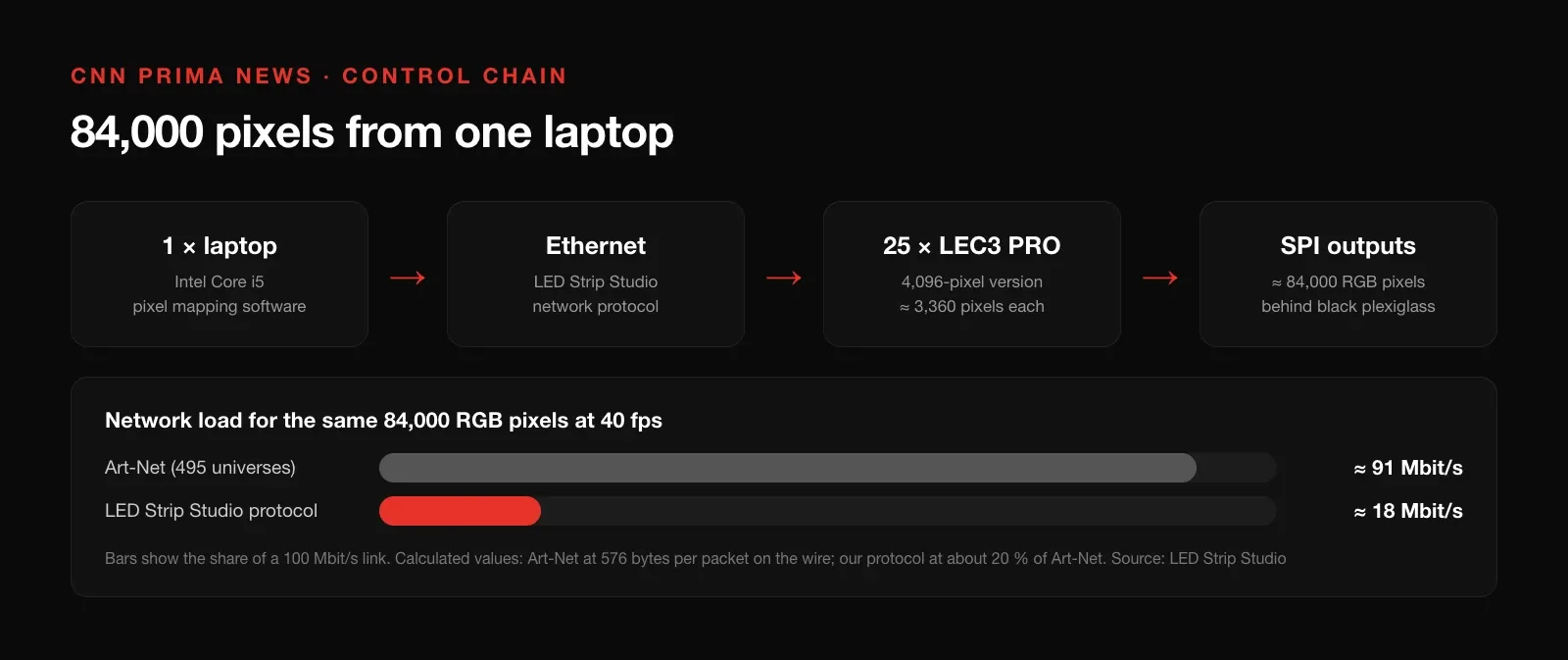
Two numbers are worth carrying into any studio project. Each controller drives on average 3,360 pixels (calculated), leaving roughly 18 % spare capacity for later set changes. And one ordinary laptop was enough to play the whole set, because the bottleneck in a build this size is the data stream, not the computer. The full breakdown is in our CNN Prima NEWS studio case study.
Why Did a Black Diffuser Double the LED Count?
The creative director chose black plexiglass as the diffuser because it gives deep colour, high contrast and very low reflections on camera. That is exactly what a broadcast set wants.
The price is brightness. A dark diffuser absorbs a large share of the light, so one strip per segment was not enough and we installed two LED strips in every light segment. That doubles both the LED count and the power demand of each segment, and the decision has to be made before the strip order, not after.
 Source: LED Strip Studio
What Did a 56,000-Pixel Olympic Studio Add?
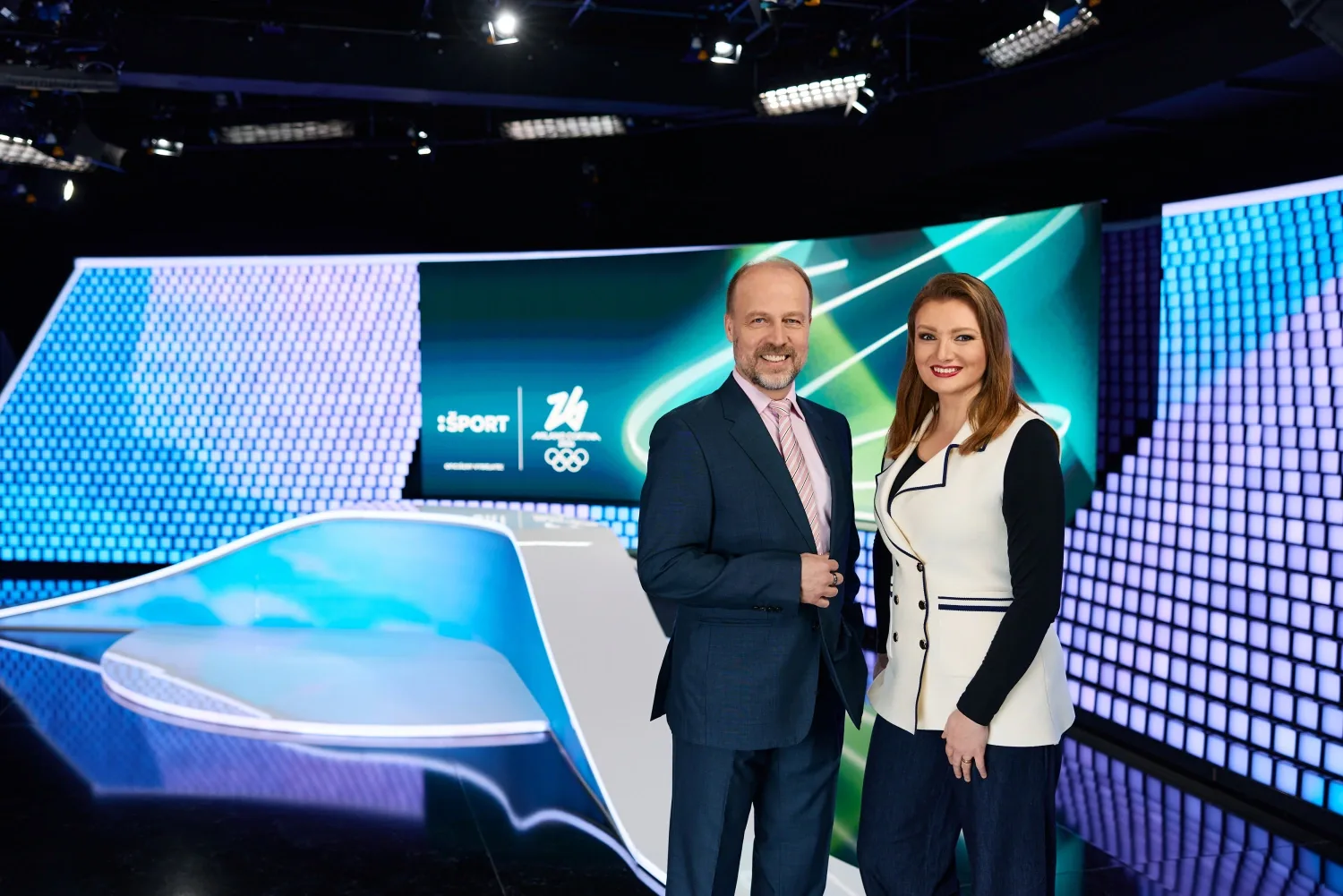
For the 2026 Olympics, Slovak national television rebuilt its sports studio in Bratislava. The architect wanted the backdrop to look like stands full of fans holding up cards. We built it from about 3,500 tiles of 10 × 10 cm, each with 16 WS2815 pixels: roughly 56,000 pixels on 40 m².
Cutting strip into thousands of short pieces was estimated at more than 4,000 hours of hand soldering. We designed a 4 × 4 pixel circuit board with its own housing and diffuser instead.
The production crew also kept its own tool. Resolume sends its HDMI output through a capture card into LED Strip Studio, which maps the video onto the tiles in real time. More photos are on our Our Work page.
 Source: LED Strip Studio
How Do You Size Control and Power for a Studio Set?
Sizing runs in one order, and each step constrains the next.
- Count the pixels, including the diffuser penalty. A dark diffuser can double the strip count, so settle it with a camera test first.
- Divide by controller capacity, then add headroom. At 4,096 pixels per unit, 84,000 pixels need 21 controllers; 25 were used, which created the 18 % reserve.
- Calculate the network load before choosing a protocol. For 84,000 RGB pixels at 40 fps, Art-Net works out at roughly 91 Mbit/s, about 91 % of a 100 Mbit/s link (calculated). We do not use Art-Net above 10,000 LEDs, and our own protocol needs about 20 % of that bandwidth. The universe arithmetic is explained in our guide to controlling LED strips over DMX and Art-Net.
- Plan the power start-up, not just the power. Every switch-mode supply draws an inrush spike at power-up. With 500+ supplies that peak can shut down the studio’s generator, so AC delay devices stagger each start by 1 to 25 seconds.
- Budget the labour. Our rule of thumb is about one hour of work per metre of strip, as explained in what a pixel LED installation really costs.
 Source: LED Strip Studio
Which Mistakes Should a Studio LED Project Avoid?
Projects with pixel LED for TV studios fail for predictable reasons, almost all of them decided long before the first transmission.
- Choosing the diffuser after the strip. A dark diffuser can require double strips and double power.
- Filling every controller to capacity. Without spare capacity, the smallest set change means new hardware.
- Defaulting to Art-Net above 10,000 pixels. Calculate the load first; a leaner pixel protocol can cut it to a fifth.
- Switching hundreds of power supplies on at once. Inrush current can take down the studio supply.
- Designing for the eye instead of the camera. Approve every colour and diffuser on the studio’s own cameras.
Planning a broadcast set and want to know what is realistic in your studio? Book a free consultation and we will size the controllers, network and power with you.
Sources & references
- LED Strip Studio — CNN Prima NEWS studio case study, Prague (published 31 August 2020, updated 10 September 2026)
- LED Strip Studio — Slovak National TV Olympic Studio 2026, Our Work page
- LED Strip Studio — LED Ethernet Controller 3 (LEC3) and LED Strip Studio 4 product pages: pixels per controller, MIDI MTC synchronization
- LED Strip Studio — DMX trigger for LED effects from the SD card (firmware 3.54 and 3.55)
- Artistic Licence — Art-Net 4 specification: ArtDmx packet, 512 bytes of DMX data
- ESTA — ANSI E1.11 DMX512-A: 512 channels per universe
Summary
Pixel LED for TV studios is scenic lighting in which every LED is addressed individually, so one set can carry several shows. News rooms need reliability, game shows need repeatable cues and talk shows need colour quality on camera. The CNN Prima NEWS studio in Prague uses about 84,000 pixels, 25 LEC3 controllers and one Intel Core i5 laptop. Its black plexiglass diffuser gives the best colour on camera but needed two LED strips per segment. The Olympic studio of Slovak national television adds 56,000 pixels on custom WS2815 tiles fed live from Resolume. Size controllers with headroom, calculate the network load before picking a protocol, and stagger the power start-up.