Installations
Why Does a Pixel LED Installation Cost More Than the LED Strip?
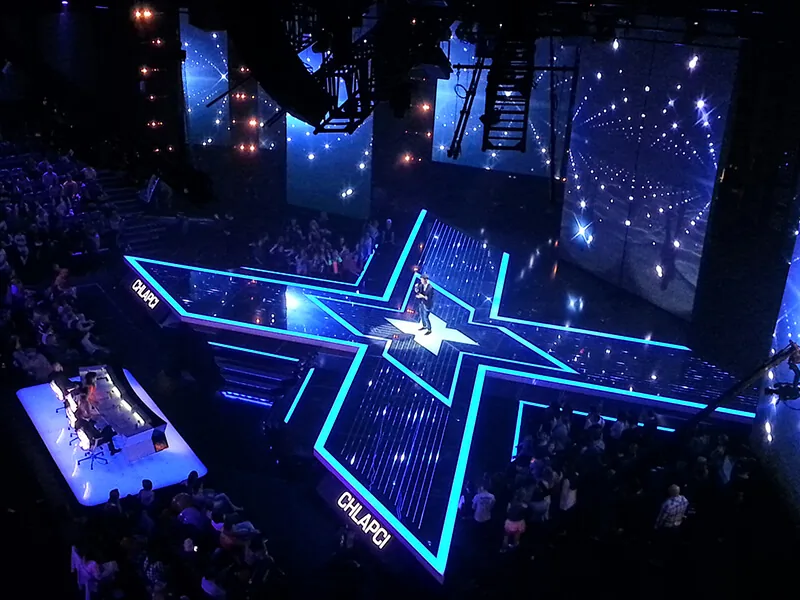
Most pixel LED projects start with the same calculation: the price per metre of strip, multiplied by the metres needed. That number is the smallest part of the budget. This article explains what a pixel LED installation actually consumes — labour hours, soldering, power injection, control channels and content.
It is written for integrators, event technicians and TV studio teams who are pricing their first large addressable LED job and want the real numbers before they quote.
What Is a Pixel LED Installation?
A pixel LED installation is a lighting build in which every LED holds its own colour value, so the whole surface behaves as a low-resolution screen. A decorative LED strip repeats one effect along its length. An addressable strip receives per-pixel data and can display movement, gradients, logos or video.
That difference is why these builds are among the most demanding jobs in the lighting industry. The strip is cheap and the control chain is not. Between the computer and the LEDs sit mapping software, a pixel controller, power supplies and a lot of hand-made connections.
Most clients arrive with a problem rather than a specification. The usual version: a TV studio with 500 metres of LED strip already planned, and a controller that cannot drive it.
Why Is Labour the Biggest Cost in a Pixel LED Installation?
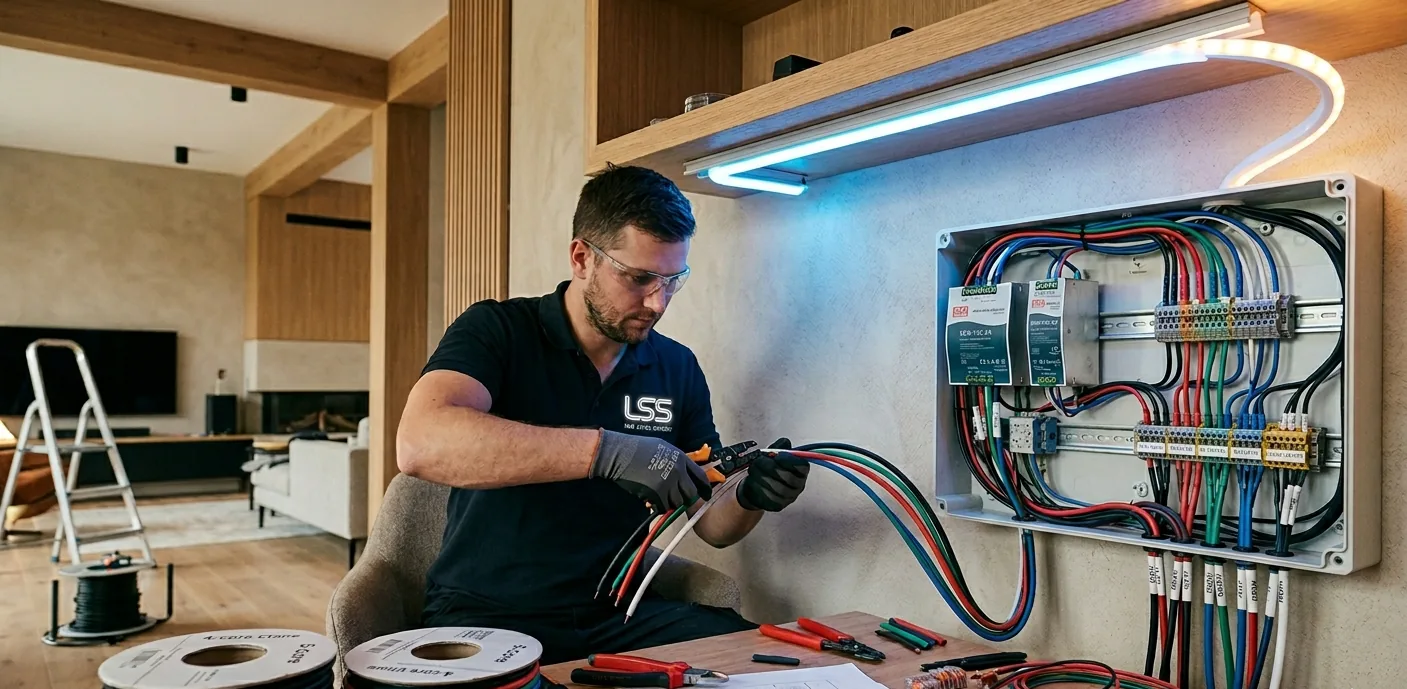
Because someone has to physically place, cut, solder and power every metre. Our working rule of thumb is one hour of work per one metre of installed strip. For a 500 metre job, that is roughly 500 man-hours before any programming begins.
The rule has held up well across our projects, and it is the number most first-time budgets omit entirely. It covers the physical build only. Mapping and content creation are separate phases with their own schedule.
 Source: LED Strip Studio
Why Do Cut Points Need Soldering Instead of Connectors?
Strips are rarely installed as one clean five-metre run. A real set is cut into segments of roughly two metres, and every cut has to be reconnected by hand.
The current through an addressable strip is too high for quick connectors to carry reliably. Every cut therefore means a soldering iron, on site, often at height or behind a set wall.
One solder joint per two metres does not sound like much. Across 500 metres it becomes hundreds of joints, and each one is a potential fault point in a live studio.
Why Do You Need Power at Both Ends of a Strip?
Voltage drops along the copper as current travels down the strip. On a run of around five metres, feeding power from one end only leaves the far end visibly dimmer than the near end.
The fix is power injection: a second feed at the opposite end, or at intervals along longer runs. It is extra cable, extra supply capacity and extra labour — planned at design stage, not discovered during commissioning.
Project Example: How Do You Plan 500 Metres in a TV Studio?
The most common enquiry we receive is a TV studio that needs to control around 500 metres of LED strip. The first thing that fails is the controller. A small controller with a handheld remote is designed for a few metres of decorative strip, not for a broadcast set.
 Source: LED Strip Studio
The second thing that fails is channel count. One DMX universe carries 512 channels, which is enough for roughly 170 RGB pixels — about five metres of strip at typical LED density. Scale that to 500 metres and the universe count becomes a design constraint of its own.
| Item | What clients budget for | What the project actually needs |
|---|---|---|
| LED strip | Price per metre × 500 m | Same, and it is the smallest line |
| Installation labour | Often omitted | ~500 man-hours at 1 hour per metre |
| Connections | Assumed plug-and-play | Hand soldering at every cut, roughly every 2 m |
| Power | One supply per run | Power injection at both ends to hold brightness |
| Control | One controller with a remote | Pixel controller and enough universes for 500 m |
| Mapping | Not considered | Every segment placed in software to match reality |
| Content | Not considered | Video or scenes supplied per installation |
If DMX addressing and universe limits are new territory, our guide to controlling LED strips over DMX covers the fundamentals. The article on the DMX decoder for LED strips explains the analog alternative.
Why Does Mapping Take Longer Than Expected?
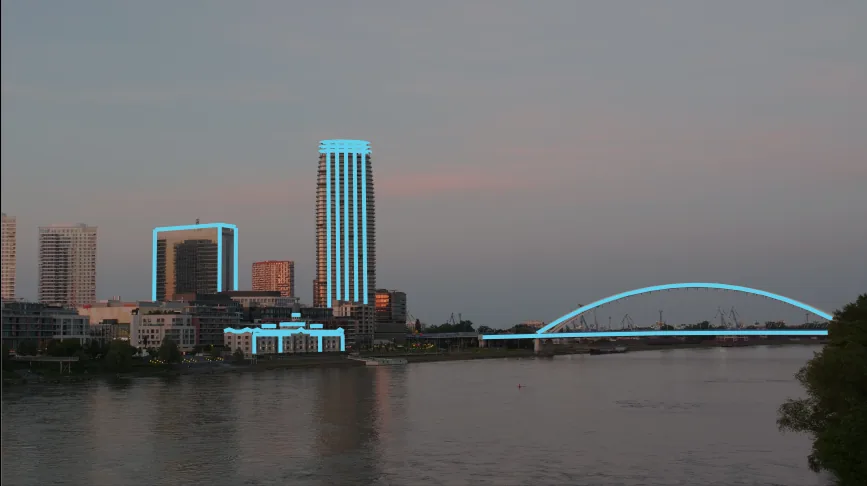
Because the software has no idea where the strips physically are. After installation, every segment must be placed in the mapping software exactly where it sits in the room, or the picture will not land correctly on the build.
The work itself resembles drawing in a vector editor: you position lines and shapes until the map matches the set. Once the map is correct, control becomes comparatively easy — the computer behaves as a media server and simply triggers scenes or videos.
 Source: LED Strip Studio
What Is an Any-Shape LED Screen?
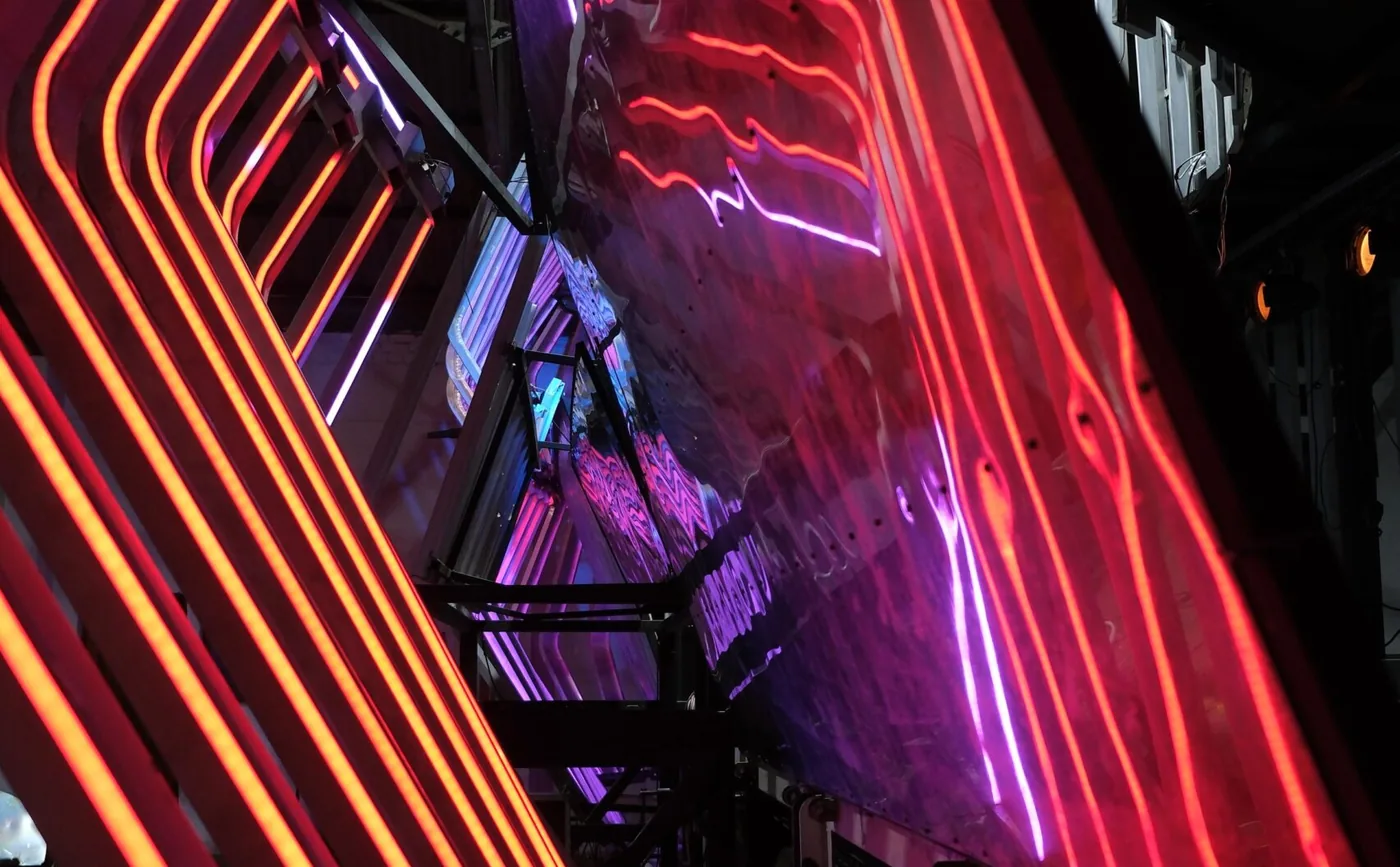
A standard LED screen is a rectangle. Pixel LED strips are not limited to one: they can follow a circle, a sphere or a full three-dimensional object. On one project we covered an entire car with addressable strips, turning the car itself into a screen in the shape of a car. What that means for out-of-home campaigns is covered in our guide to pixel LED advertising.
 Source: LED Strip Studio
Mapping is what makes that possible, and it is also what makes it slower. A rectangle is trivial to map. A car body is not. Mapping can even be done remotely — on an installation in Saudi Arabia, the team on site pointed a video camera at each section while the map was built over a video call.
Who Provides the Video Content?
The client does, and this is the point most often forgotten. We have an 80 m² curved installation in Slovakia that has been running the same single video for eight years, because no budget was allocated to a content designer.
The equivalent happens in TV studios: pixel strips installed around the set, then driven with one flat colour on every segment. A simple fade from one colour to another along a desk edge would already look better. Buying a Ferrari and driving it at 20 km/h is the usual comparison. For scenes built around movement rather than static colour, see mobile LED lighting for events and our portfolio of pixel LED projects.
Which Mistakes Ruin a Pixel LED Project?
Failures rarely come from the LEDs. They come from decisions made before anyone entered the room.
- Budgeting the strip and not the hours. Labour dominates the cost, at roughly one hour per metre.
- Specifying a consumer controller. A remote-controlled unit cannot address hundreds of metres of pixels.
- Ignoring universe limits. About 170 RGB pixels fill one DMX universe — around five metres of strip.
- Powering long runs from one end. Brightness falls off visibly without power injection.
- Leaving content out of the scope. Nobody is contracted to produce the video, so the install runs one clip forever.
- Aligning expectations too late. Owner, designer and integrator should agree on the effect before hardware is ordered.
Our founder discussed pixel LED installations, LED costumes and wireless DMX with the Lighting Controls Podcast, presented by the Lighting Controls Association.

Planning a large pixel LED build? Book a free consultation and we will size the control chain and the schedule with you.
Summary
The LED strip is the cheapest line in a pixel LED installation. Labour dominates: roughly one hour of work per metre installed, which makes a 500 metre TV studio job about 500 man-hours before any programming starts. Strips are cut into short segments and hand-soldered because the current is too high for quick connectors, long runs need power injection at both ends to hold brightness, and one DMX universe covers only about 170 RGB pixels. Mapping every segment to its real position and producing the video content are separate phases, and content is the item most often left out of the budget entirely.