Same Supply. No Extra Adapter.
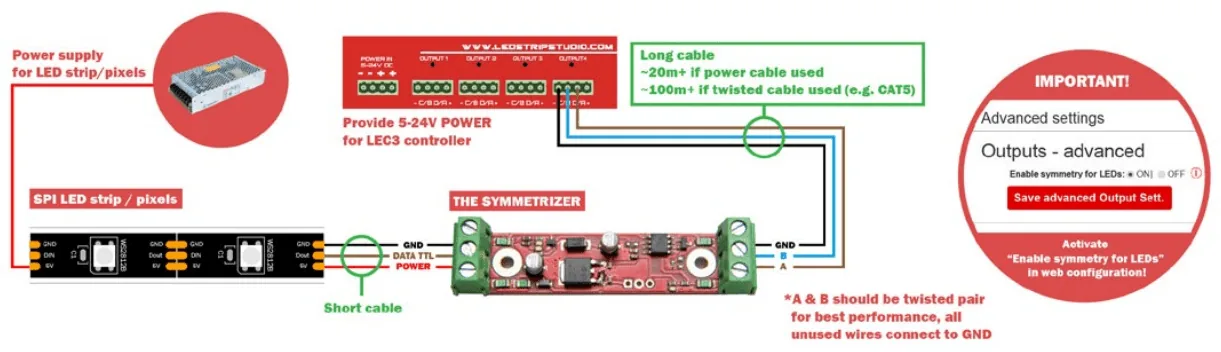
The Symmetrizer runs on anything from 5 to 24 V DC. Its TTL port carries power as well as data, so the board simply shares the supply of the LED strip it feeds.
Powered From the Strip
One supply for the strip and the board
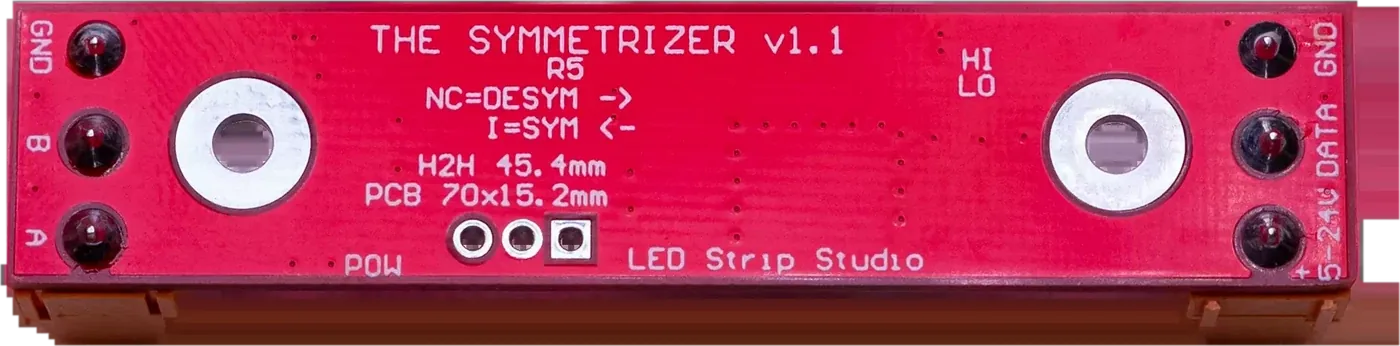
The TTL port has three pins: GND, DATA and +POWER. At the start of an LED segment the same three wires go to the strip, so the Symmetrizer takes its power from the supply that already feeds the LEDs.
5 V, 12 V and 24 V strips all sit inside the 5–24 V range. With a draw of 0.05 A and less than 1.2 W, the board adds practically nothing to the supply load.
- TTL port: GND, DATA, +POWER
- Differential port: GND, B, A
- 5–24 V DC, 0.05 A, under 1.2 W
- No separate power adapter at the strip
Wiring
Screw terminals on both ends
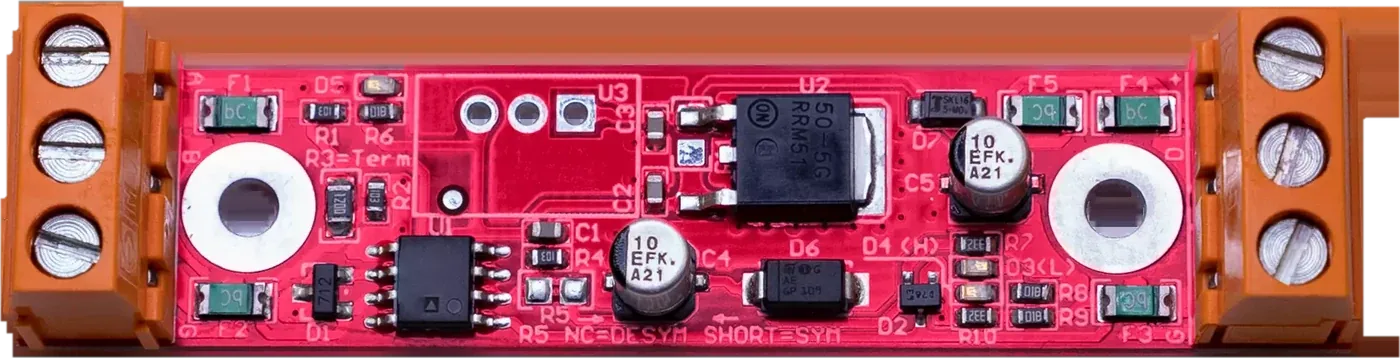
Both ports use screw terminal blocks with a 5 mm pitch for wires up to 1.5 mm², so the board can be wired on site without soldering.
Run A and B as one twisted pair of the long cable and connect the unused wires to GND. Keep the TTL lead from the board to the first pixel short.
- Screw terminals, 5 mm pitch, wire up to 1.5 mm²
- A and B on one twisted pair
- Unused cable wires connected to GND
- Short TTL lead to the first pixel
Power and Ports
Electrical specification
FAQ
Power questions
No. It takes 5–24 V DC through the +POWER and GND pins of its TTL port, usually from the same supply as the LED strip.
Yes. All three voltages are inside the 5–24 V DC operating range.
About 0.05 A, with a rated power below 1.2 W.
Planning the Power for a Long Run?
Tell us about your strips and cable lengths and we'll help you plan supplies and signal converters.
Book a Free Consultation →