80+ IC Chips. Use What You Have.
LSS4 doesn't dictate which LED IC chip you use. All standard chips — APA, WS, TM, SK, and 80+ other types and clones — are supported. Configure the chip type once per device, and the software handles the correct data protocol for each strip automatically.
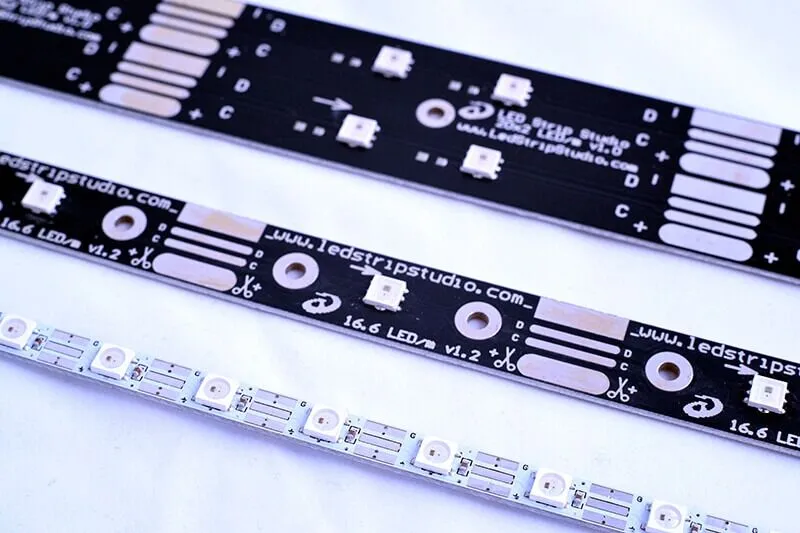
Chip Compatibility
The strip you already have will work
In real installations, the LED strip choice is often driven by factors outside the software — supplier availability, budget, existing inventory, or client specifications. LSS4 is designed to work with what you have rather than requiring specific hardware. Over 80 IC chip types are supported, covering the major families from APA, WS (WorldSemi), TM (Titan Micro), SK, and many of the Chinese clone chips that use compatible protocols.
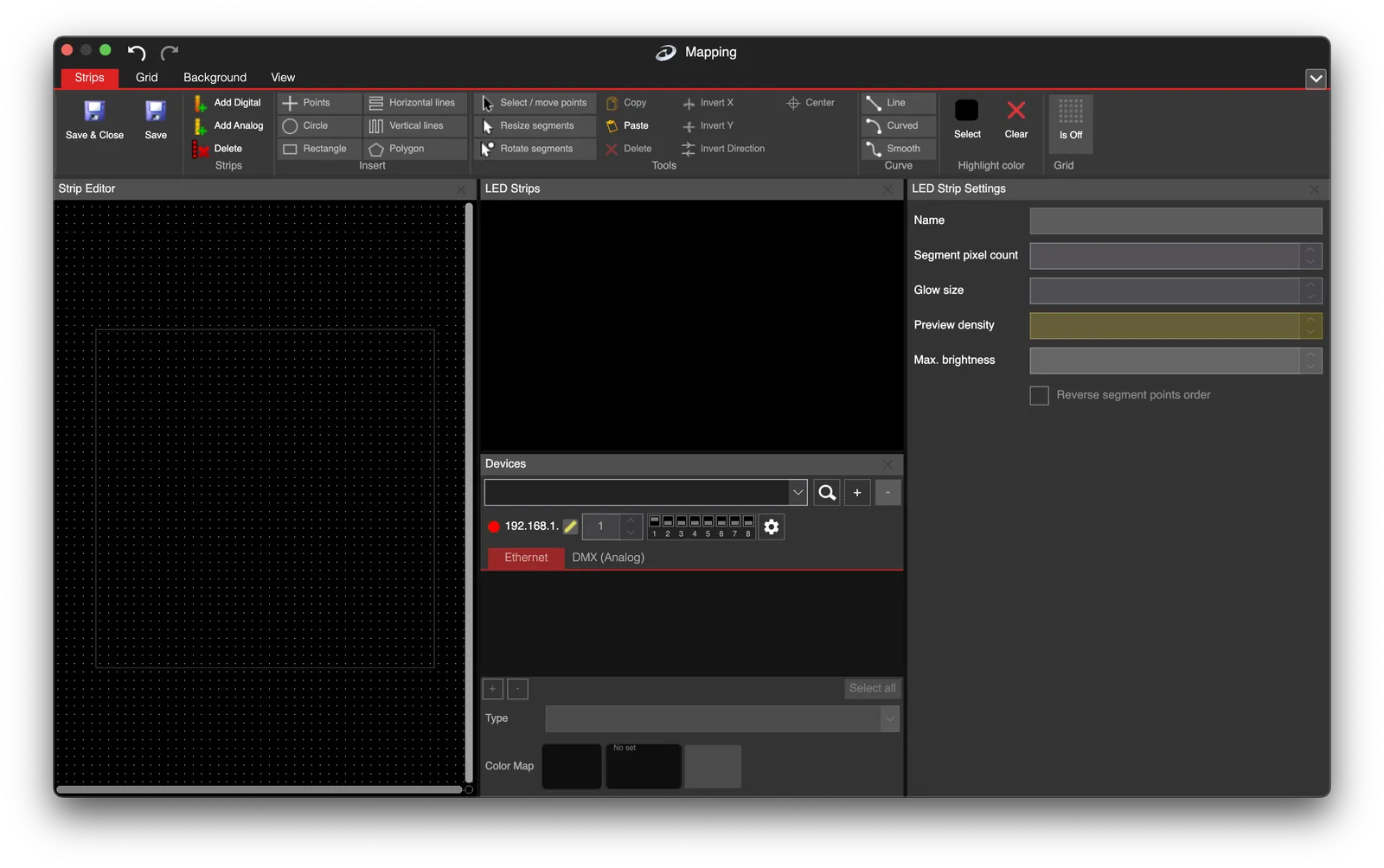
The chip configuration is set per output channel on the LEC3 controller. You set it once during hardware setup, and the software sends the correct data format to each channel automatically. Mix different chip types on different channels in the same installation — LSS4 handles the differences transparently.
- 80+ IC chip types from all major manufacturers
- APA family: APA102, APA104, APA107 and variants
- WS family: WS2811, WS2812, WS2812B, WS2815, WS2818 and more
- TM family: TM1804, TM1809, TM1814 and variants
- SK family: SK6812, SK9822 and related chips
- Mix different chip types across channels in one installation
Color Orders & Protocols
RGB, RGBW, RGBWW — all covered
Different chips use different color byte orders — some use RGB, others GRB, BRG, or other sequences. RGBW and RGBWW strips add a white channel (or warm white channel) that needs to be driven separately. LSS4 handles the byte ordering for each chip type automatically based on the chip selected in the device configuration.
For analog strips controlled via DMX or PWM (as opposed to individually addressable pixels), LSS4 also supports analog RGB and RGBW output through supported hardware. A single workspace can include both digital pixel strips and analog zones running together.
- Correct byte ordering per chip type — RGB, GRB, BRG, etc.
- RGBW chip support with independent white channel control
- RGBWW (warm white) chip support
- SPI protocol for data+clock chips (APA102, SK9822)
- Single-wire protocol for WS2812-family chips
- Analog RGB/RGBW output for non-pixel zones
Supported Chip Families
Common chips that work with LSS4
APA Series
APA102, APA104, APA107 — data+clock SPI chips known for high refresh rates and global brightness control.
WS Series
WS2811, WS2812B, WS2815, WS2818 — the most widely used single-wire LED chip family worldwide.
TM Series
TM1804, TM1809, TM1814 — Titan Micro chips used in a wide range of addressable LED products.
SK & Others
SK6812 (RGBW variant popular for warm white applications), SK9822, and 60+ additional chip types and clones.
FAQ
IC chip questions
LSS4 supports over 80 LED IC chip types including the full APA family (APA102, APA104, APA107), the WS family (WS2811, WS2812, WS2812B, WS2815, WS2818), the TM family (TM1804, TM1809, TM1814), SK chips (SK6812, SK9822), and many other types and compatible clones. If you're unsure whether your specific chip is supported, contact the support team.
Yes. Each output channel on the LEC3 controller can be configured for a different IC chip type. This means you can drive WS2812B strips on some channels and APA102 strips on others within the same installation. LSS4 sends the correct data protocol to each channel based on the chip configuration — you don't need to do anything special at the software level beyond setting the chip type per channel. More in LED Chip Support on LEC3 & SPI Matrix.
Yes. RGBW strips — where each pixel has a separate white LED in addition to the RGB elements — are fully supported. LSS4 handles the four-channel output required by RGBW chips including the SK6812 RGBW variant. RGBWW (dual white, warm and cool) strips are also supported. The white channel can be controlled independently or set to auto-calculate from the RGB values.
See LED Strip Studio in Action
Book a free consultation and we'll show you how LED Strip Studio 4 fits your project.
Book a Free Consultation →