


Description
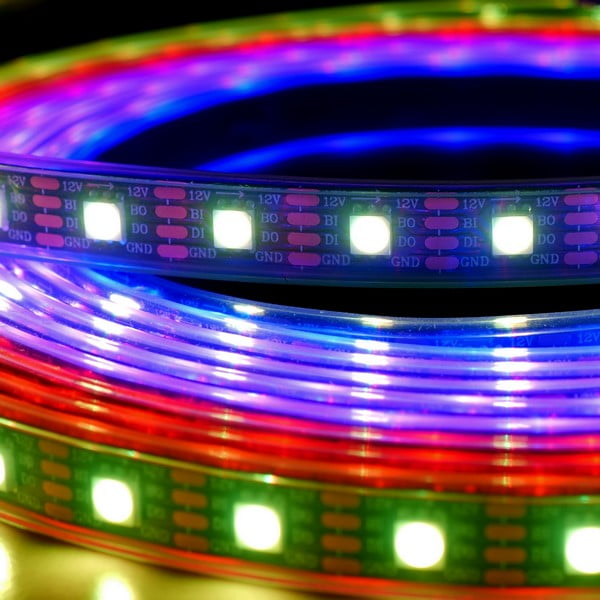
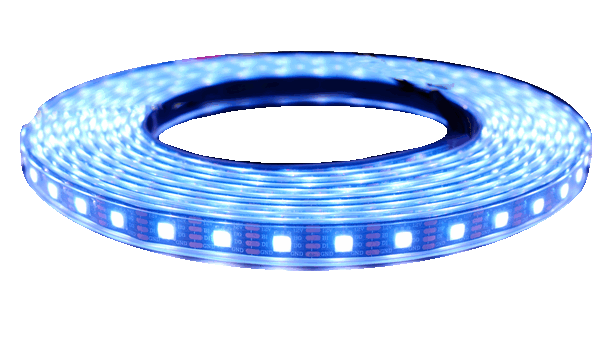
The WS2815 LED strip is the 12 V workhorse of pixel lighting: 60 individually addressable RGB pixels per metre, 300 on a 5 m roll, sealed to IP67 and carrying a second, backup data line. Every LED holds its own colour, and one dead pixel no longer takes the rest of the run down with it.
What makes the WS2815 LED strip a 12 V strip?
Each pixel takes 12 V in and drops it to the 5 V its own control circuit needs, with the driver and the LEDs together in a single SMD5050 package. Higher voltage means less loss along the copper, which is why WS2815 has become the default for large installations while 5 V strips fade after a few metres.
Fewer power injection points per run
At 12 V the same length needs fewer feeds than its 5 V equivalent: less cable, fewer supplies, less trunking to hide. It does not remove power injection from the plan, it just leaves you with less of it to install and maintain.
60 pixels per metre, 300 on the roll
Pixel pitch is 16.7 mm, close enough that at normal viewing distance the run reads as a line of light rather than a row of dots. Three DMX channels per pixel puts a full roll at 900 channels, which is two Art-Net universes at the 170 pixels per universe an LEC 3 output maps.
How does the backup data line work?
WS2815 carries a second data line alongside the first. When a pixel fails, the signal passes it and the rest of the chain keeps receiving data, so instead of a dead run you have one dark diode. On a ceiling installation or a touring rig, that difference is the whole evening.
Where the backup wire belongs
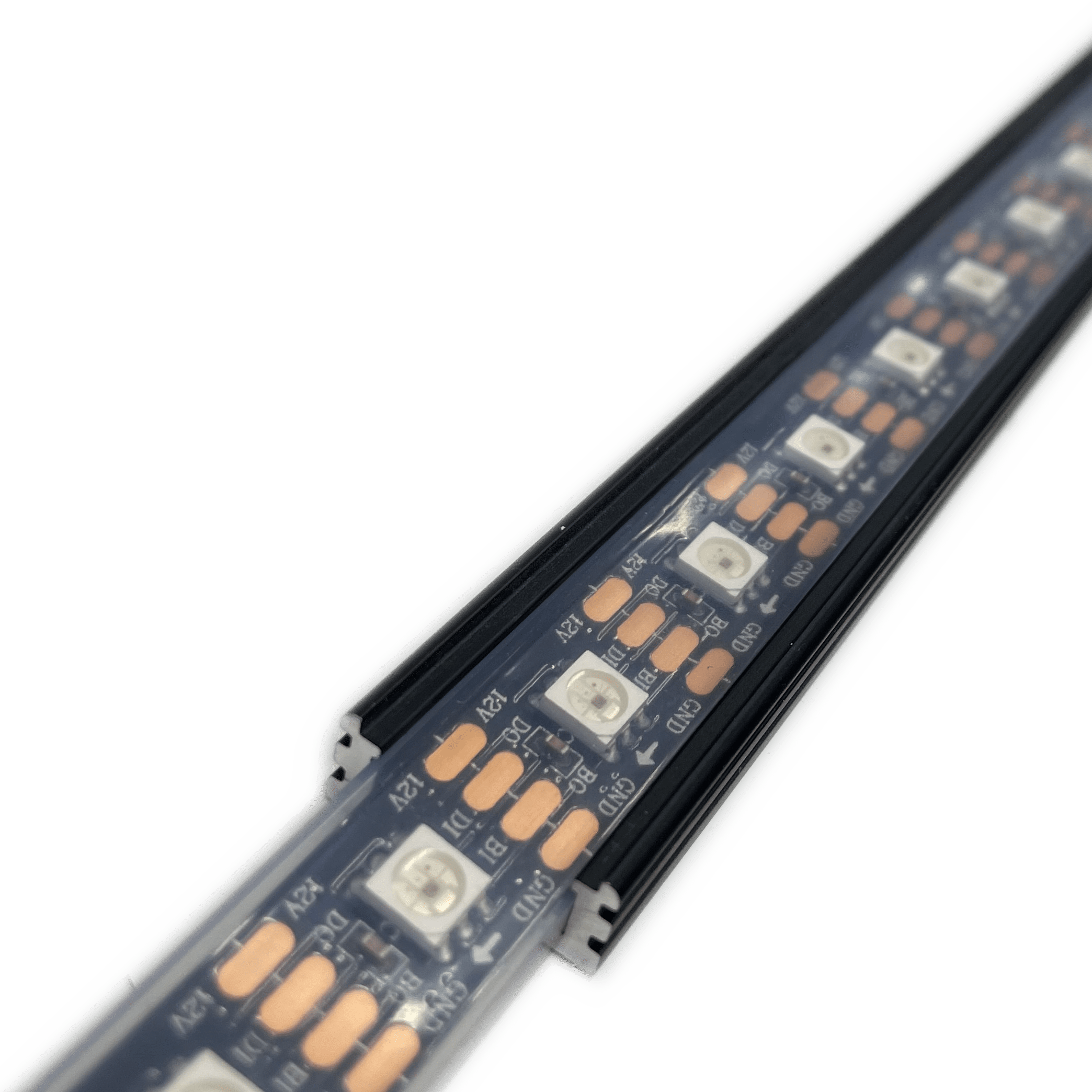
The backup pin goes to ground. Straight onto the controller’s ground pin works only over a very short distance — about 20 cm in our own testing — so on anything longer, take the backup to the ground on the strip itself. Both options are shown in our backup data guide.
“B” on the controller does not stand for Backup
Every controller output has four pins and one of them is marked D/B. That B is differential data, used for the negative line on long runs with The Symmetrizer. Wiring the strip’s backup pin to it is the most common mistake we are asked about.
How much power does a 12 V WS2815 LED strip need?
Take the current per metre from the specification table, multiply it by your length and keep headroom on top. One LEC 3 output passes up to 5 A; past that the strip draws from its own supply, with the grounds tied together and only the data line coming from the controller.
Plan the run with the WS2815 calculator
Our pixel LED calculator for WS2815 is set up for exactly this strip: enter the length and it returns the controllers, power supplies and injection points the project needs. As a rule of thumb, feed anything over about three metres from both ends, and add a fresh feed roughly every five metres of chained roll.
Will a WS2815 LED strip flicker on camera?
Not below roughly 67 frames per second. The chip modulates at 2000 Hz, high enough for event video, streaming and most broadcast work, though a high-speed camera will still find the flicker. Colour is 8 bits per channel over a data-only line running at 800 kbps.
Is IP67 right for your installation?
IP67 means dust-tight and protected against temporary immersion, so rain, splashes and wash-down are not an issue: façades, terraces, pontoons, stage decks, festival builds and anything that has to survive a night outdoors.
The sealing that buys you all this also traps heat and stiffens the strip. Indoors, where nothing is ever going to get wet, an unsealed strip bends into tighter shapes and runs cooler — so pay for IP67 where the weather is real, not everywhere.
Which controllers drive the WS2815 LED strip?
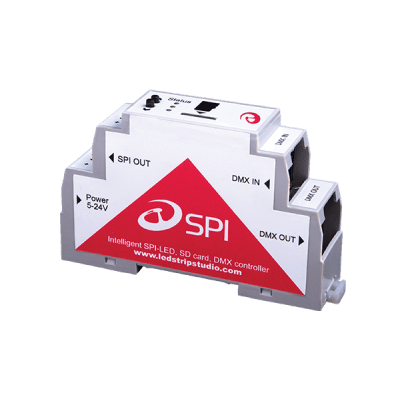
All of ours. WS2815 sits in the TM1809 800 kHz group of our IC list, which covers LEC 3, SPI Matrix, the SPI LED Controller, REACTIVO 2, SPI LAMP and profiLED — the full list is in our supported IC types document. Map it in LED Strip Studio software or feed it Art-Net from any console.
Long cable runs between controller and first pixel
Single-ended SPI data degrades with distance, so keep the controller near the first pixel where the building lets you. Where it does not, The Symmetrizer converts the signal to differential and carries it far beyond that. Send us the layout and our support team will check the channel count, the power budget and the injection points before you order.