


Description
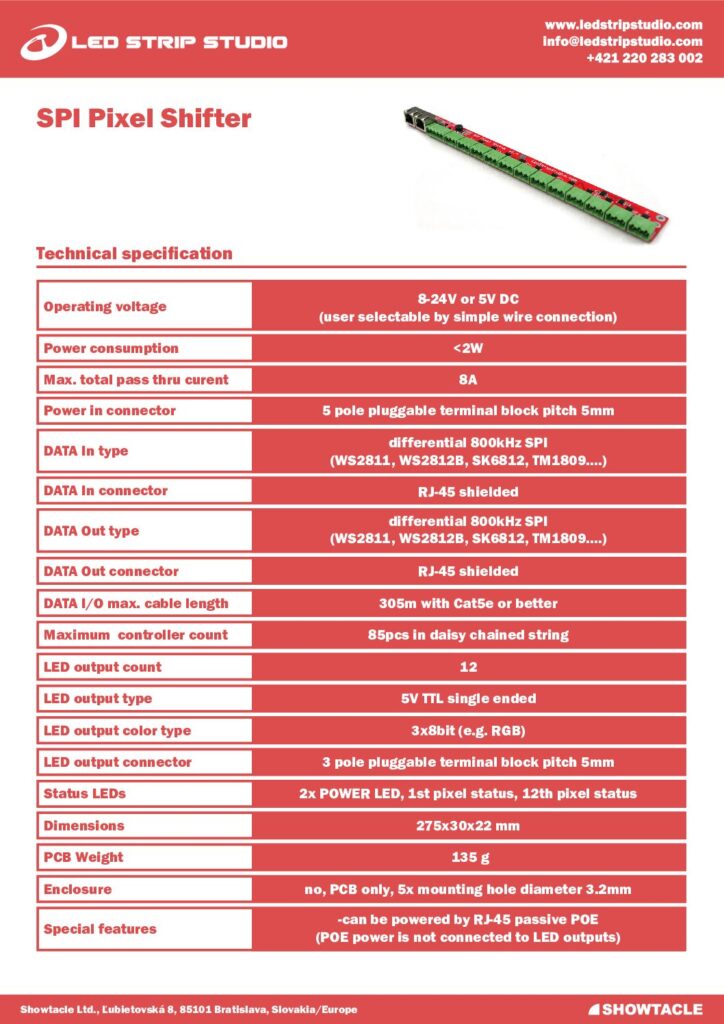
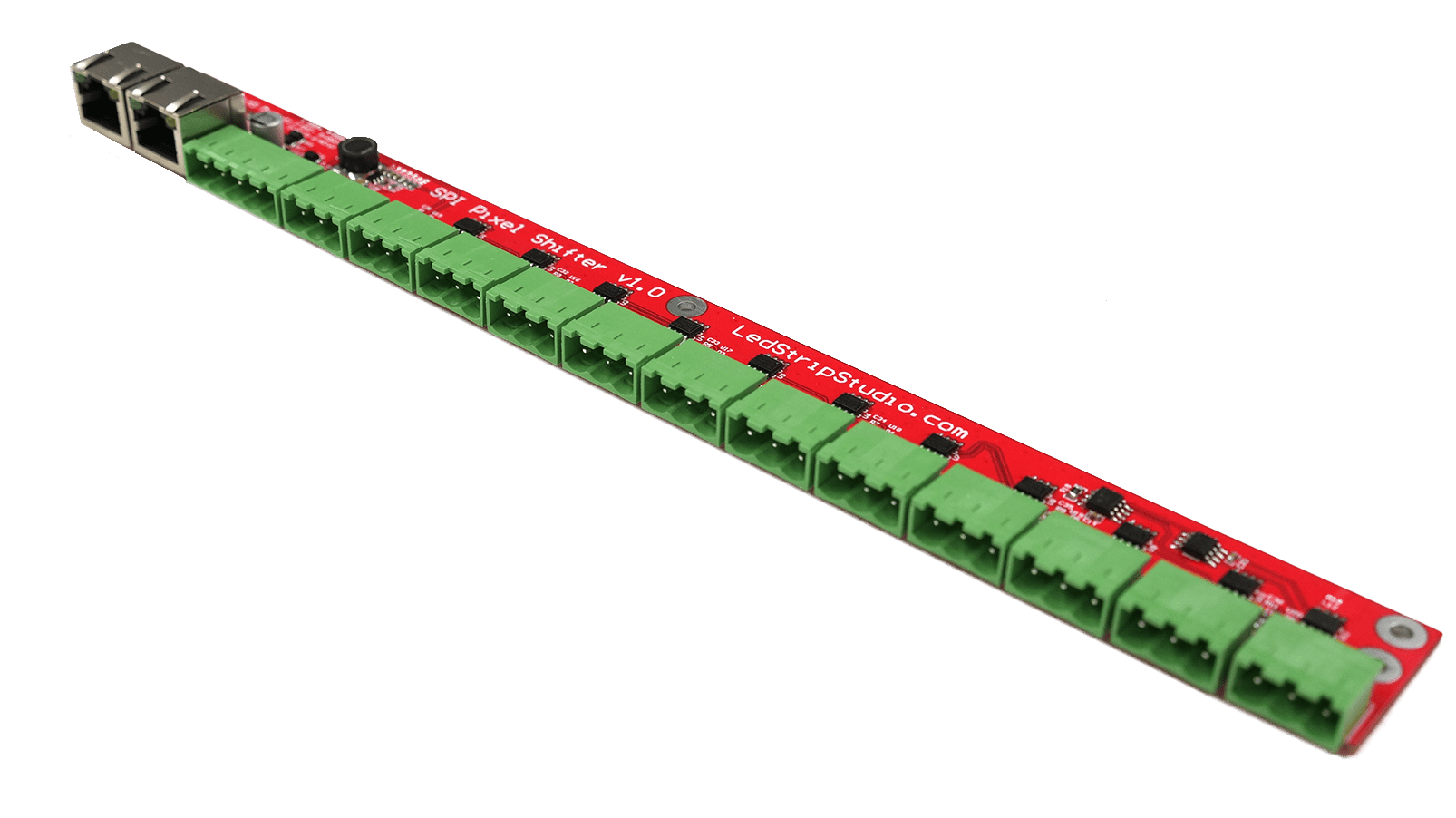
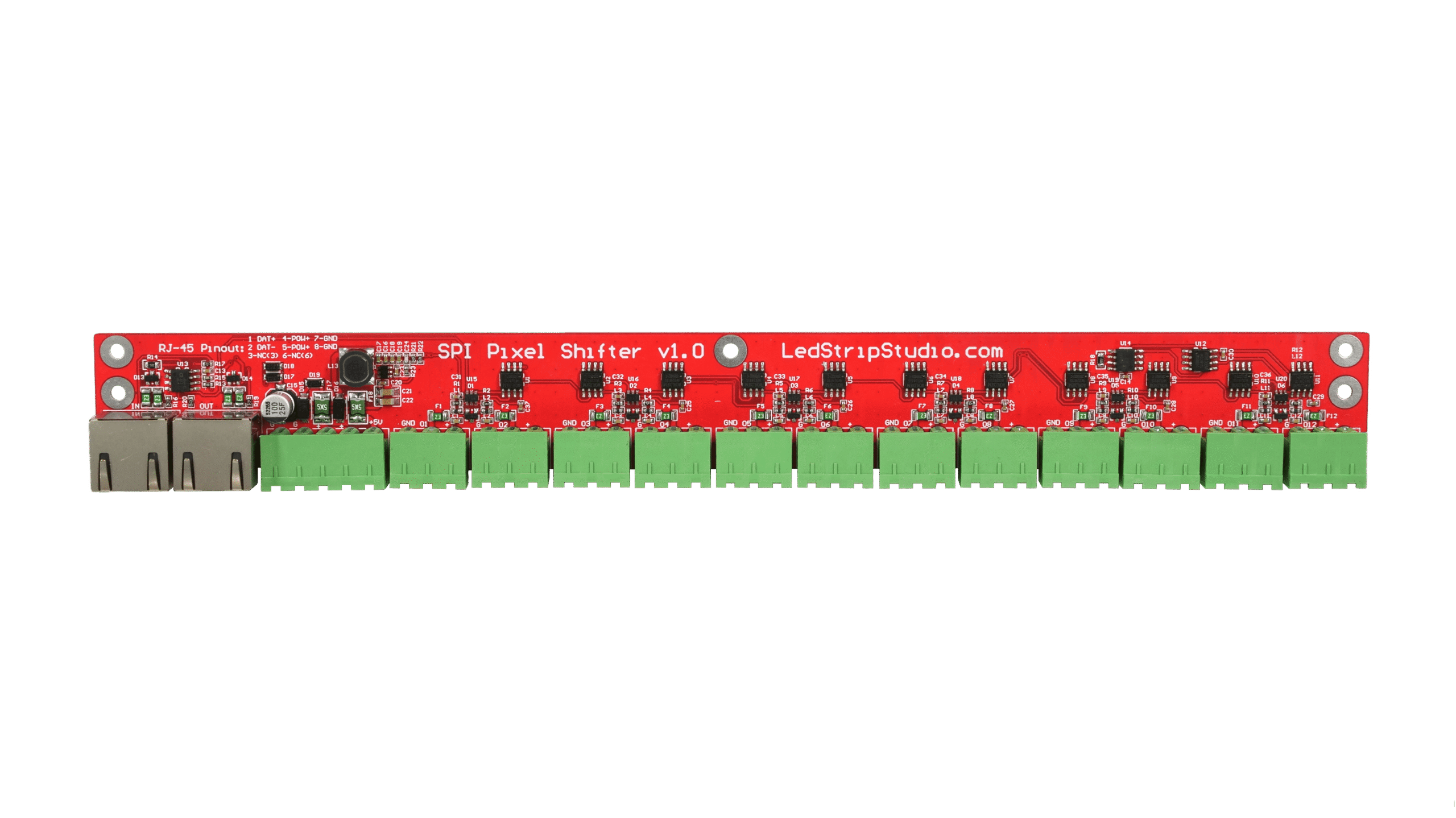
The SPI Shifter is a distribution board for digital addressable pixels. It connects twelve pixels in a row, and the data line never travels back to the start. Each output shifts the signal by exactly one RGB pixel. A built-in Symmetrizer then carries that signal over long cables. We developed the board for hanging lamps. It solves the same problem in any fixture with pixels in a line.
What does the SPI Shifter 12 pixel board do?
A row of digital pixels normally needs a daisy chain. You wire pixel to pixel, then bring the cable back to the start. In a hanging lamp, that return run is the last thing you want. It adds cable, weight and visible wiring to a clean fixture.
The SPI Shifter removes it. One board serves twelve pixel positions. You wire the pixels out from a single point instead of through each other.
The board shifts data by one RGB pixel
Each output moves the data stream on by exactly one RGB pixel. Every connected pixel therefore gets its own colour data, in the right order. You address twelve pixels, and twelve pixels light up in sequence.
Pixels with several diodes count as one
A pixel here means one digital pixel. That can be a single diode, or a module with several diodes. The module simply has to behave as one addressable pixel. Both types work the same way on this board.
What happens when one pixel fails?
A classic daisy chain has one weak point. The data passes through every pixel, so one dead unit stops everything after it. The SPI Shifter drops that dependency.
Disconnect one pixel and the rest keep working. Think of a chandelier four metres above a lobby floor. There, one failure means a small repair instead of a dark installation.
How far can the SPI Shifter be from the controller?
Far. The board has a built-in Symmetrizer. The SPI signal therefore travels as a differential pair, not as a plain TTL line. Pair it with a controller that sends a differential signal, such as the LEC 3. The pixels can then sit hundreds of metres from the controller.
RJ45 ports and standard network cable
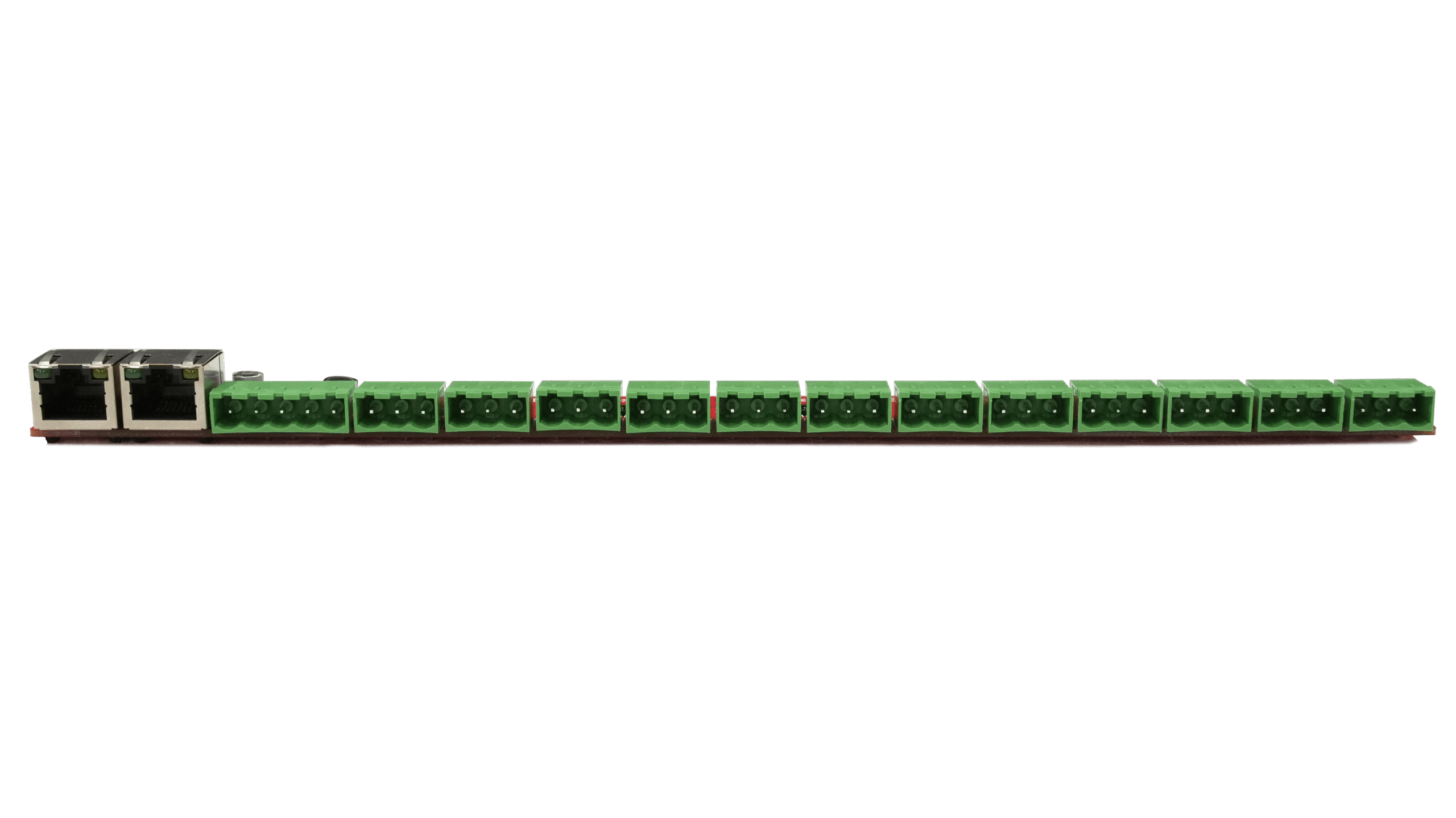
The signal runs over RJ45. A standard twisted-pair network cable therefore does the work. It costs little, every site has it, and it terminates in seconds. It also keeps the differential pair twisted together. That twist is what makes the long distance possible. Your controllers stay in the rack room, and only network cable reaches the fixtures.
Which voltage does the SPI Shifter run on?
Either 5 V DC or 8–24 V DC. The range covers 5 V pixel systems as well as 12 V and 24 V supplies. Most architectural and stage installations run on one of those. The board therefore fits the power you already have. You add no second supply to the fixture.
Where does the SPI Shifter belong?
Hanging lamps come first, because we designed the board for them. It also suits pixel chandeliers, suspended fixtures and custom luminaires. Decorative installations benefit too, especially where the wiring must stay invisible. Any layout with a dozen pixels in a line far from the controller fits as well.
The board works with our pixel controllers, including the LEC 3 and the SPI LED Controller. You map and animate the whole run in LED Strip Studio software.
SPI Shifter specifications at a glance
- 12 digital pixels in a row from one board
- One RGB pixel shift per output
- Built-in Symmetrizer for long-distance differential transmission
- RJ45 signal ports for standard network cable
- 5 V DC or 8–24 V DC operating voltage
- The other pixels keep working if one pixel drops out
Not sure how many boards your fixture needs? Ask our support team — we build these installations ourselves.